KEEPWAY · PRE-OPENED BAGGING
KPW-A8/A12 Pre-Opened Bagging Machine for Small Parts
Choose a KPW-A8/A12 pre-opened bagging machine for small parts by matching your bags on a roll, loading method and label workflow.
Package hardware kits, cables, phone cases and other suitable small goods using a bagging station built around your samples. Choose a standard model or a TR version with adhesive-label printing, then specify any feeder, stand or discharge conveyor separately.
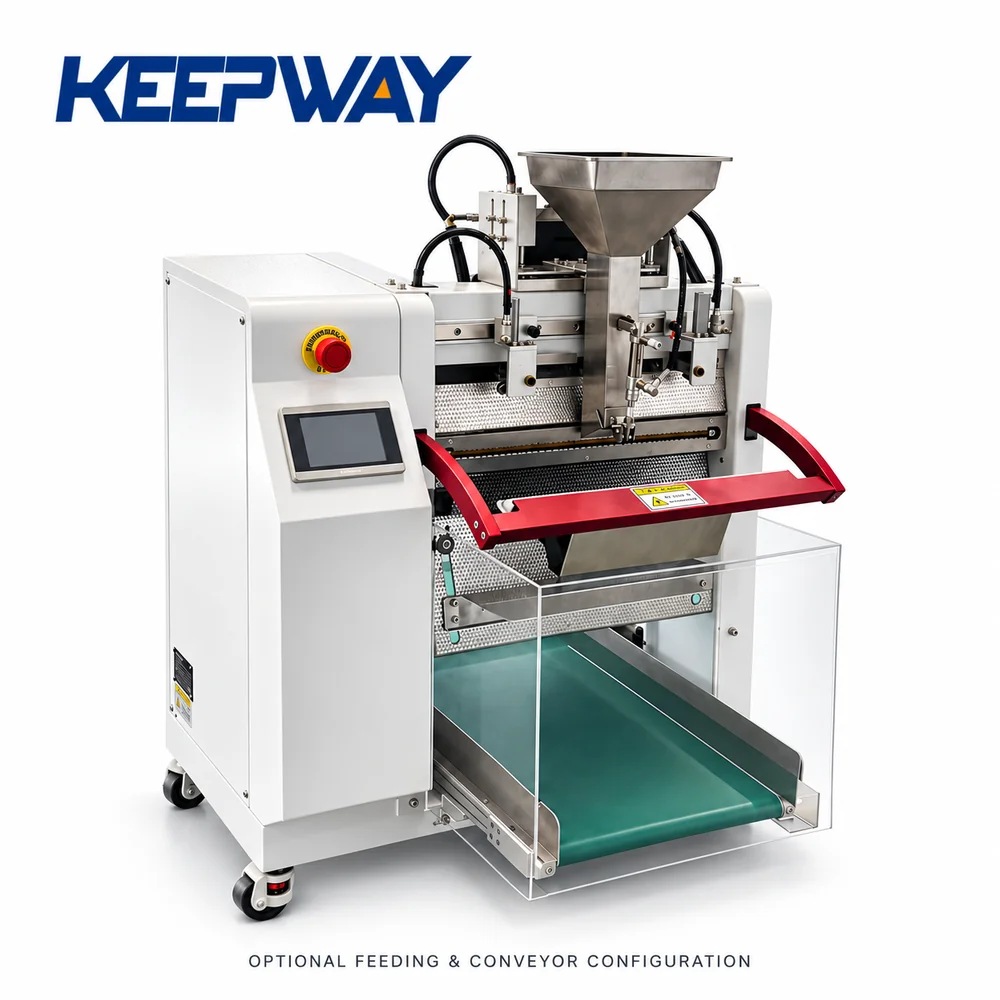
Illustrated system includes optional feeding and conveyor equipment. It does not represent the standard tabletop machine footprint.
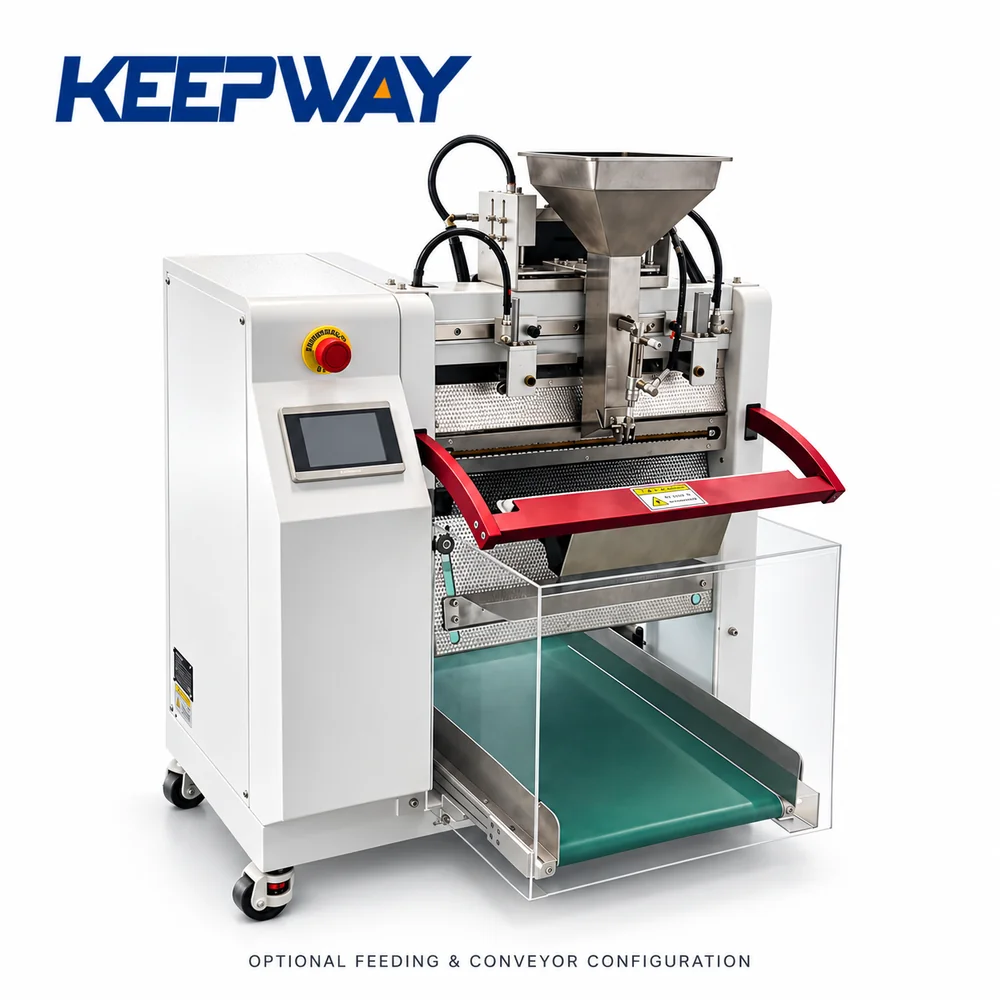
Output is a reference from the supplied specification. Confirm accepted finished packs per minute with your products, bags, loading method and label workflow.
WATCH THE BAGGING PROCESS
See the process. Discuss your own bag and product.
Use these demonstrations to discuss the loading area, bag presentation and sealing arrangement needed for your application.
Pre-opened bagging demonstration
Roll-bag sealing demonstration
Demonstration configurations may include optional equipment. Confirm the supplied model, feeding equipment, conveyors and label application in your quotation. Videos do not establish a measured production rate or certification.
Will this fit your packaging task?
Send your bag material and dimensions, a product photograph, and your target output. We can discuss the suitable KPW-A8/A12 variant and any optional feeding or label-printing requirements.
01 · START WITH THE CONSUMABLE
A matching bag width is only the first check
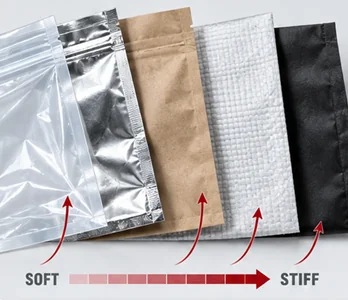
A roll can fit the machine's nominal width yet still present poorly at the loading point. Bag opening, perforation, material stiffness, filled weight and the clear sealing margin all belong in the selection process. Send a sample from the supplier you plan to use, together with the actual product.
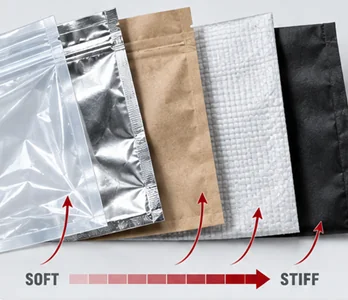
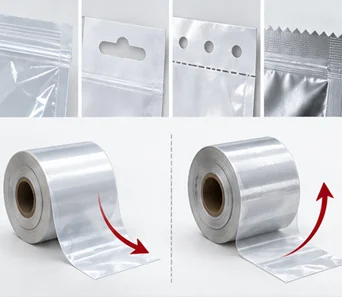
PE bags, suitable paper structures and laminated bags are candidates for configuration review. Paper requires a suitable closing structure or sealable layer. These material names do not establish compatibility by themselves. Do not order rolls from their width alone or assume loose zipper pouches work as bags-on-roll.
02 · APPLICATION FIT
Small-parts bagging for hardware, accessories and kits
Begin with the handling task: one item per bag, a counted quantity of the same item, or a mixed kit. Each calls for a different loading review. The examples below illustrate application types, not completed customer trials.
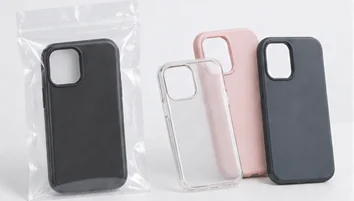
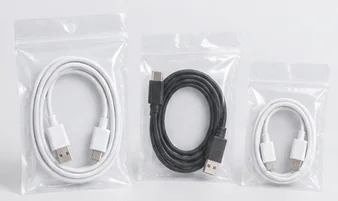
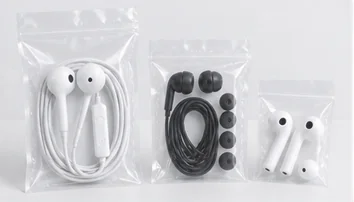


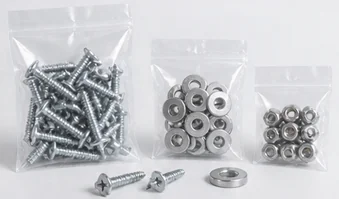
Check puncture risk for sharp hardware, product tangling, surface protection and the loaded bag's weight. Static-sensitive electronics, hygiene-sensitive goods and any direct food-contact use need an application-specific review of materials and handling. These requirements are not established by the application image.
03 · FIVE MODELS, CLEAR SCOPE
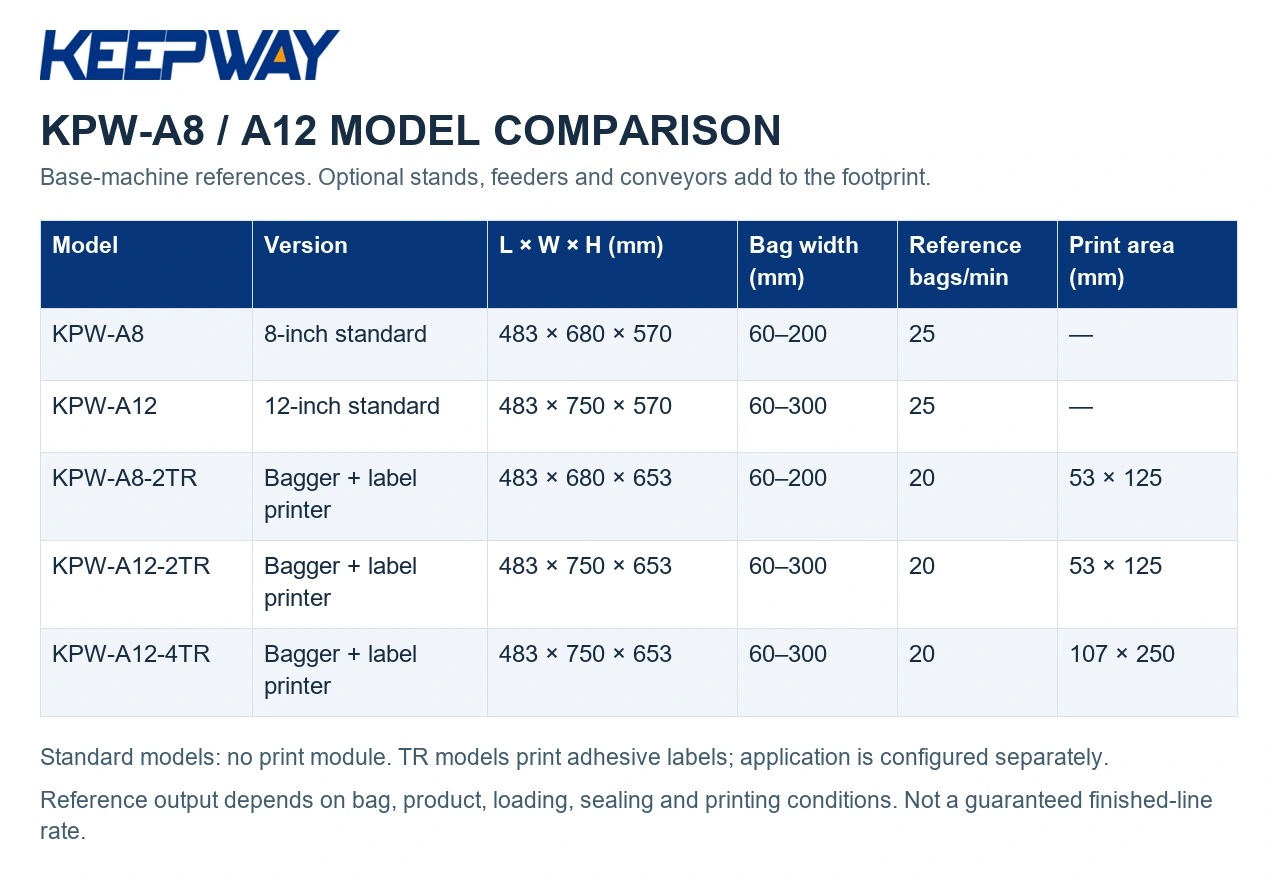
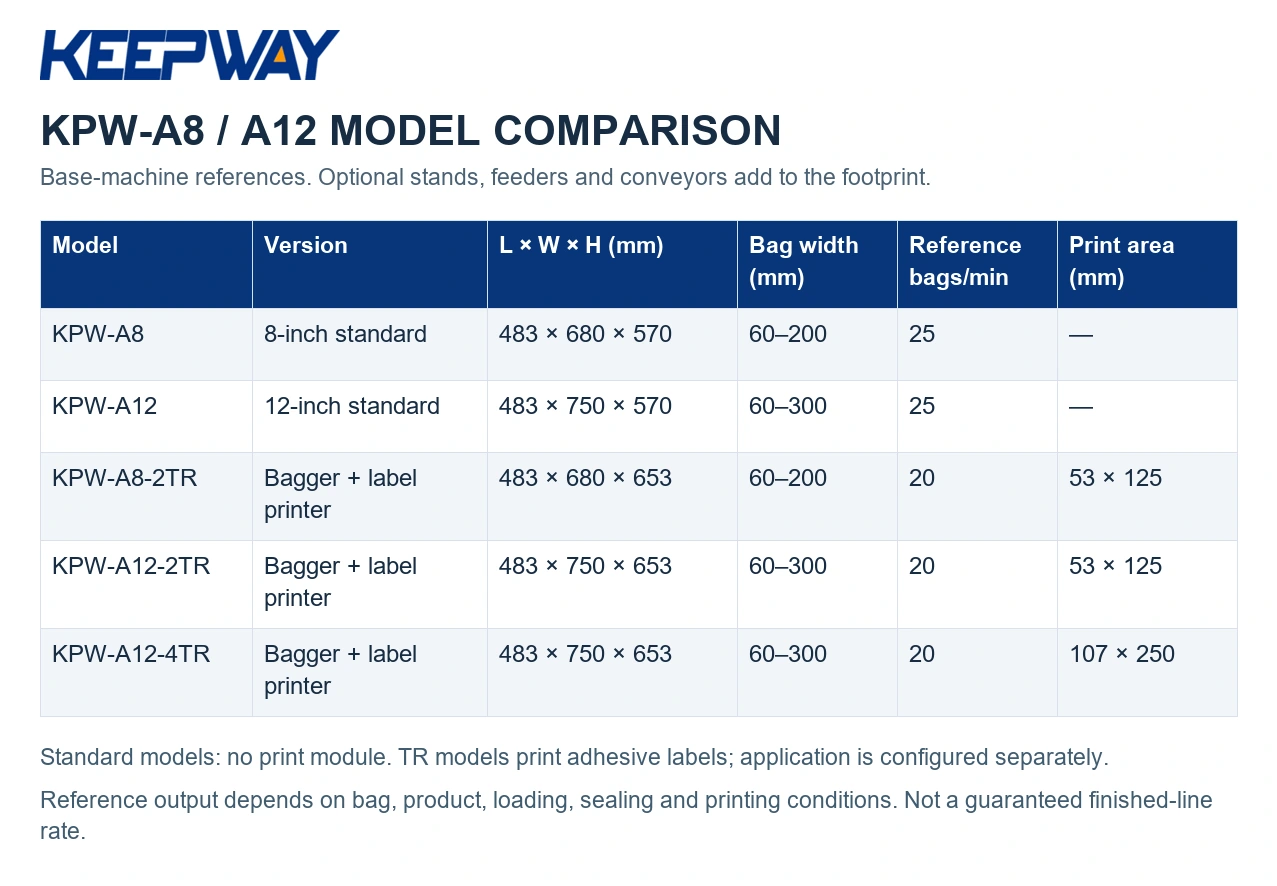
KPW-A8/A12 model and specification comparison
Use the bag-width range to shortlist a format, then decide whether the station needs label printing. Dimensions below describe the base machines; stands, hoppers, feeders and conveyors require a separate layout.
| Model | Version | L × W × H (mm) | Bag width (mm) | Reference bags/min | Print area (mm) |
|---|---|---|---|---|---|
| KPW-A8 | 8-inch standard | 483 × 680 × 570 | 60–200 | 25 | — |
| KPW-A12 | 12-inch standard | 483 × 750 × 570 | 60–300 | 25 | — |
| KPW-A8-2TR | Bagger + label printer | 483 × 680 × 653 | 60–200 | 20 | 53 × 125 |
| KPW-A12-2TR | Bagger + label printer | 483 × 750 × 653 | 60–300 | 20 | 53 × 125 |
| KPW-A12-4TR | Bagger + label printer | 483 × 750 × 653 | 60–300 | 20 | 107 × 250 |
Standard KPW-A8 and KPW-A12 models do not include printing. A8-2TR and A12-2TR share the smaller print area; A12-4TR provides the larger print area.
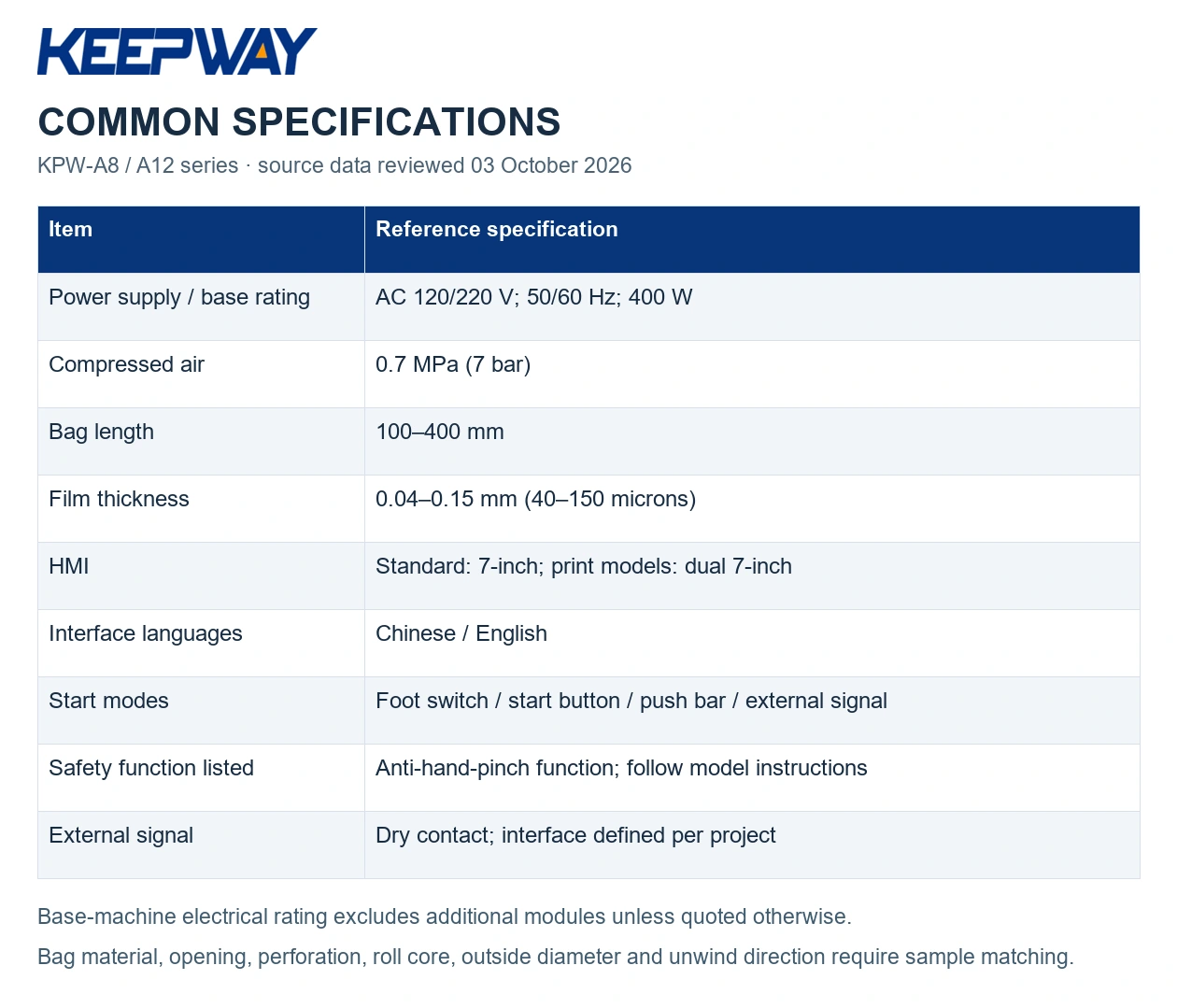
Common base-machine specifications
| Item | Specification |
|---|---|
| Power supply / base rating | AC 120/220 V; 50/60 Hz; 400 W |
| Compressed air | 0.7 MPa (7 bar) |
| Bag length | 100–400 mm |
| Film thickness | 0.04–0.15 mm (40–150 microns) |
| HMI | Standard: 7-inch; print models: dual 7-inch |
| Interface languages | Chinese / English |
| Start modes | Foot switch / start button / push bar / external signal |
| Safety function listed | Anti-hand-pinch function; follow model instructions |
| External signal | Dry contact; interface defined per project |
Specify the destination voltage when requesting a quotation. Confirm the exact supplied electrical configuration and the air supply for the complete station. The 400 W base rating does not establish the installed power of optional modules.
Open the downloadable specification graphics
04 · BUILD THE RIGHT LOADING WORKFLOW
Manual loading or optional feeding and counting
For frequent changes and mixed kits, describe how the operator currently gathers and verifies each item. For repeat parts, share sample quantities and acceptable count variation so a counting, bowl-feeding or weighing arrangement can be assessed. Optional modules are quoted for the application; the base bagger should not be assumed to count or load the product automatically.
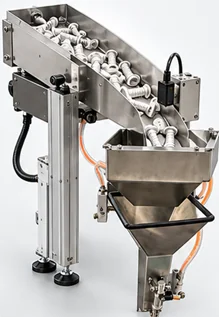
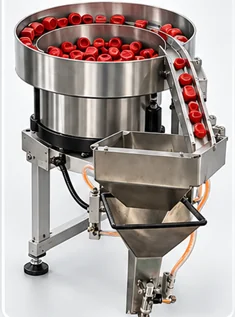
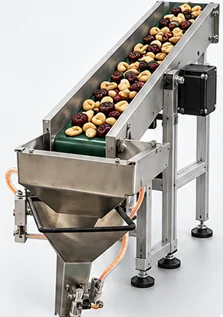
For mixed hardware kits, record the quantity of every component and the number of changeovers in a normal shift. For delicate or irregular products, identify which faces may contact guides and whether components snag or bridge. Agree how a short count or interrupted cycle will be identified before selecting a feeder.
05 · SEPARATE PRINTING FROM APPLICATION
TR baggers with adhesive-label printing
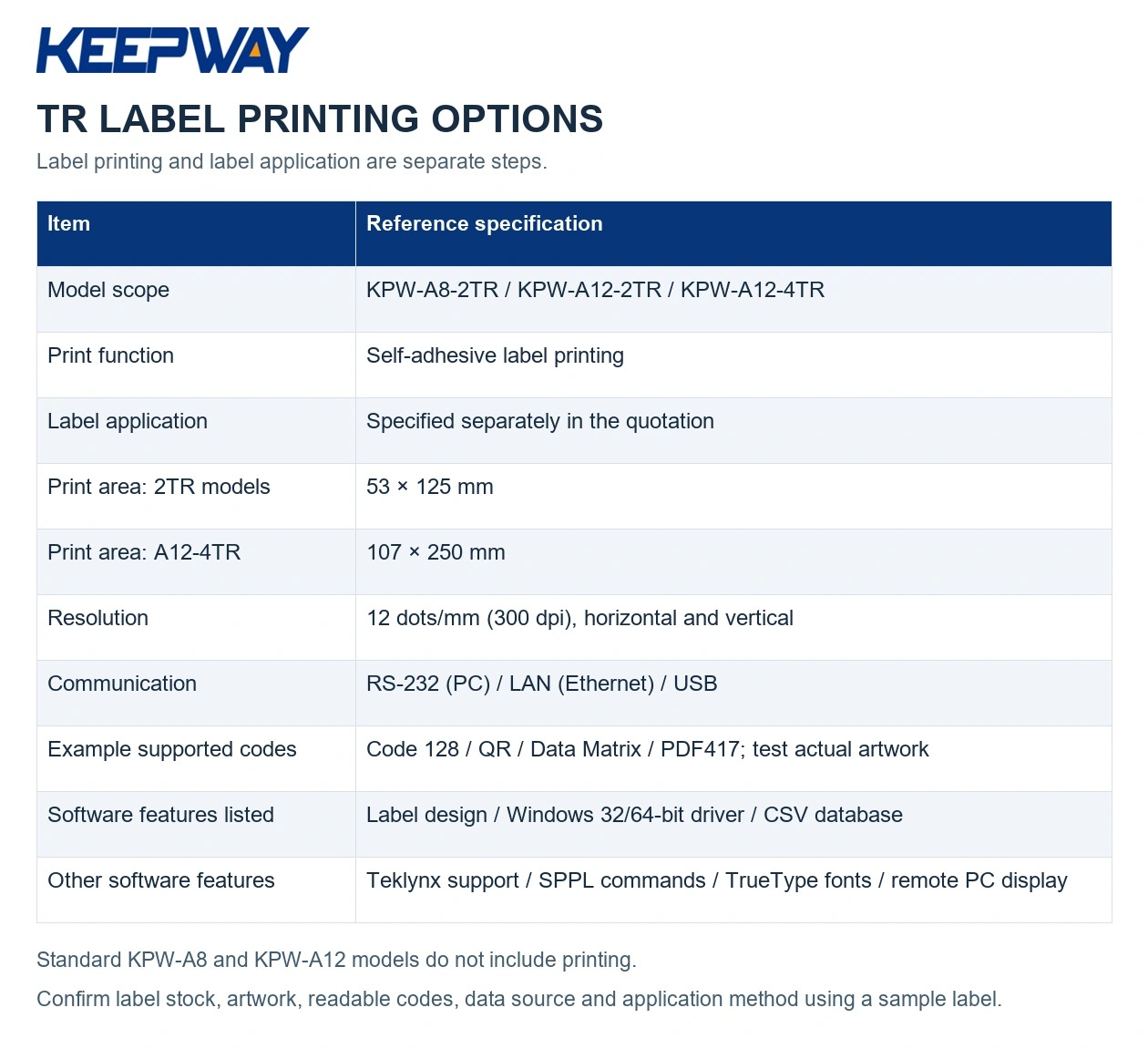
The TR variants print self-adhesive labels. Label application is a separate configuration choice; direct printing on the packaging bag and automatic label application are not implied by the TR model name.
Provide a real label layout, data source and the required label position. Review readability after applying the label to the filled bag, especially near folds and sealing areas. Ask for a sample print using the proposed stock and actual code data.
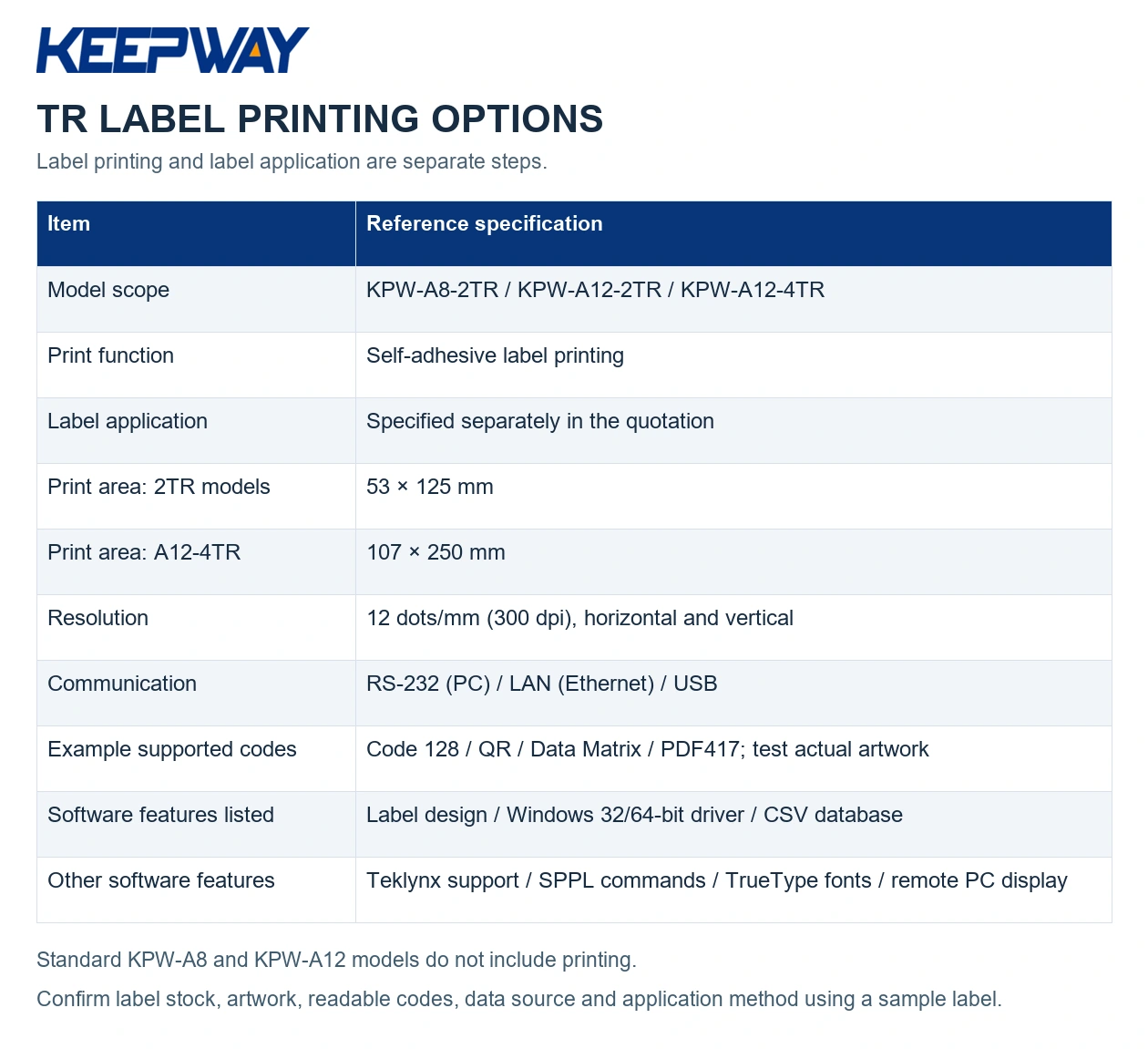
| Print item | Reference |
|---|---|
| Print area: 2TR models | 53 × 125 mm |
| Print area: A12-4TR | 107 × 250 mm |
| Resolution | 12 dots/mm (300 dpi), horizontal and vertical |
| Communication | RS-232 (PC) / LAN (Ethernet) / USB |
| Example supported codes | Code 128 / QR / Data Matrix / PDF417; test actual artwork |
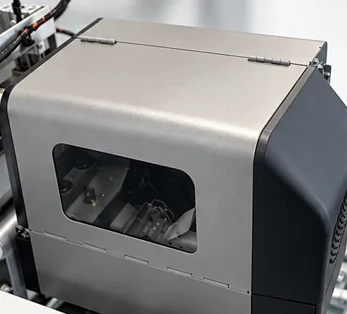
The source specification lists SAYASIS Label Design, a Windows 32/64-bit driver, Teklynx support, SPPL commands, TrueType fonts, remote PC display and CSV database support. Confirm the delivered software version and any licensing or integration scope in the quotation.
Listed barcode formats
EAN-13, EAN-8, Code 128, Code 39, CODABAR, ITF 2 of 5, ITF-14, UPC-A / UPC-E; Data Matrix, QR, PDF417, Aztec; GS1-128, GS1 DataMatrix, GS1 DataBar
Support in a specification is not a barcode-grade guarantee. Verify the required content and scan result on the intended label.
06 · REVIEW THE WORKING AREA
Bag guides, controls and access
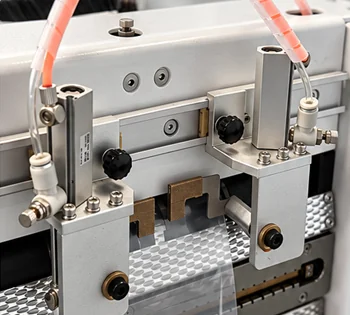
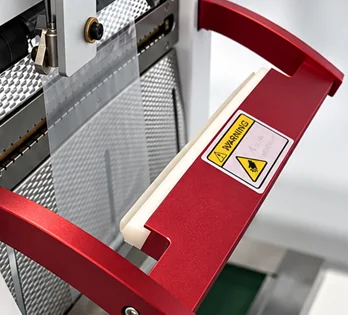
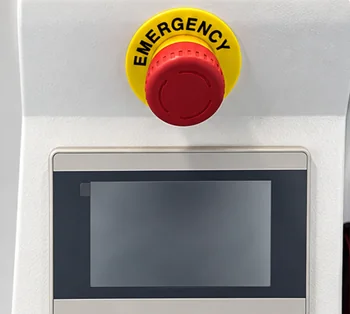
The listed start modes are foot switch, start button, push bar and external signal. Confirm the selected mode with the proposed workstation. The listed anti-hand-pinch function does not replace the operating instructions, guarding assessment or site procedures. External dry-contact integration is defined per project; a network port on the printer does not by itself provide ERP/WMS integration.
07 · AGREE WHAT A GOOD PACK LOOKS LIKE
From your bag sample to a configuration decision
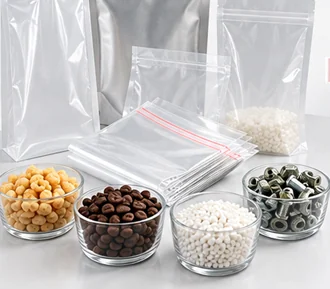
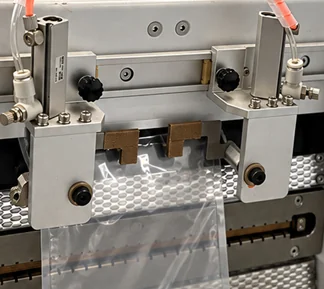
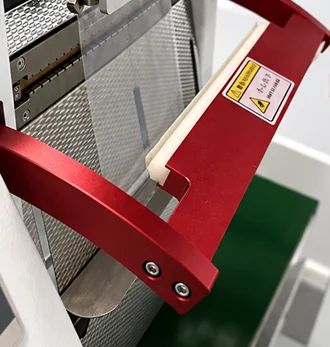
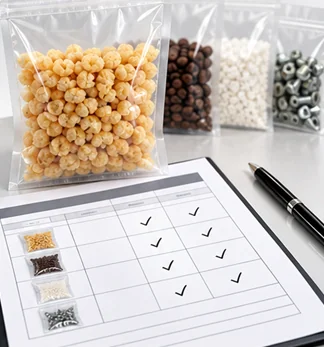
Define the trial before comparing output. Include representative bags, the most difficult product, the required kit count and any printed label. Record approved bag and product versions so a later consumable change can be reviewed against the same conditions.
| Buyer concern | What to agree in the sample review |
|---|---|
| Bags fail to open or separate | Proposed roll, opening and perforation; representative filled samples; interruption records. |
| Kit counts vary | Component list, handling method, acceptable count criteria and how exceptions are checked. |
| Printed labels are hard to use | Actual stock, artwork, data, label position and the separate application step. |
| Quoted speed does not match the shift | Accepted packs ÷ elapsed minutes, including loading, label handling and agreed replenishment/changeover time. |
| The line needs unexpected accessories | Written list of bagger, stand, feeder, conveyor, printer, applicator, utilities and interface work. |
Questions buyers ask before ordering
Is this a machine for making empty courier bags?
This page concerns packing products using matched pre-opened bags. It does not specify an empty-bag manufacturing line. For broader fulfillment equipment, compare the poly bagging machine range.
Can every paper, poly or laminated bag run on one machine?
No universal compatibility is claimed. Submit the actual material, opening, perforation, roll and product samples. Suitable paper structures and laminates require a matched configuration and sample review.
Are the hopper, feeder and conveyor included?
They are optional combinations in the illustrations. Ask for an itemized quotation and a complete station layout. The model-table dimensions are for the base machines.
Does TR mean automatic print-and-apply?
TR means adhesive-label printing in this series. Label application is specified separately. Include the intended label position, handling sequence and data source.
Should I select a tabletop bagger or an apparel mailer line?
Compare the product size, loading method and intended output. The KPW-A8/A12 series here addresses matched small-product and kit bagging. For larger soft goods, review the horizontal courier-bag packing workflow and the poly mailer selection guide.
YOUR NEXT STEP
Send the samples that define your quotation
A clear starting brief helps us separate the base bagger from the optional modules your process needs.
- Product photographs, dimensions, weight and items per bag.
- Bag material, width, length, thickness and an empty/filled sample.
- Roll core, outside diameter, unwind direction, opening and perforation.
- Required accepted packs per minute, shift volume and changeover pattern.
- Manual or automatic loading, counting requirements and discharge method.
- For TR: label stock, artwork, data source and application method.
- Installation country, voltage, air supply and available station space.
Specify “KPW-A8/A12” in your enquiry. Final configuration is agreed after sample and application review.