
Add: Wanda Plaza, Fuqiao Street, Rencheng District, Jining City, Shandong Province, China
+86-18206519878
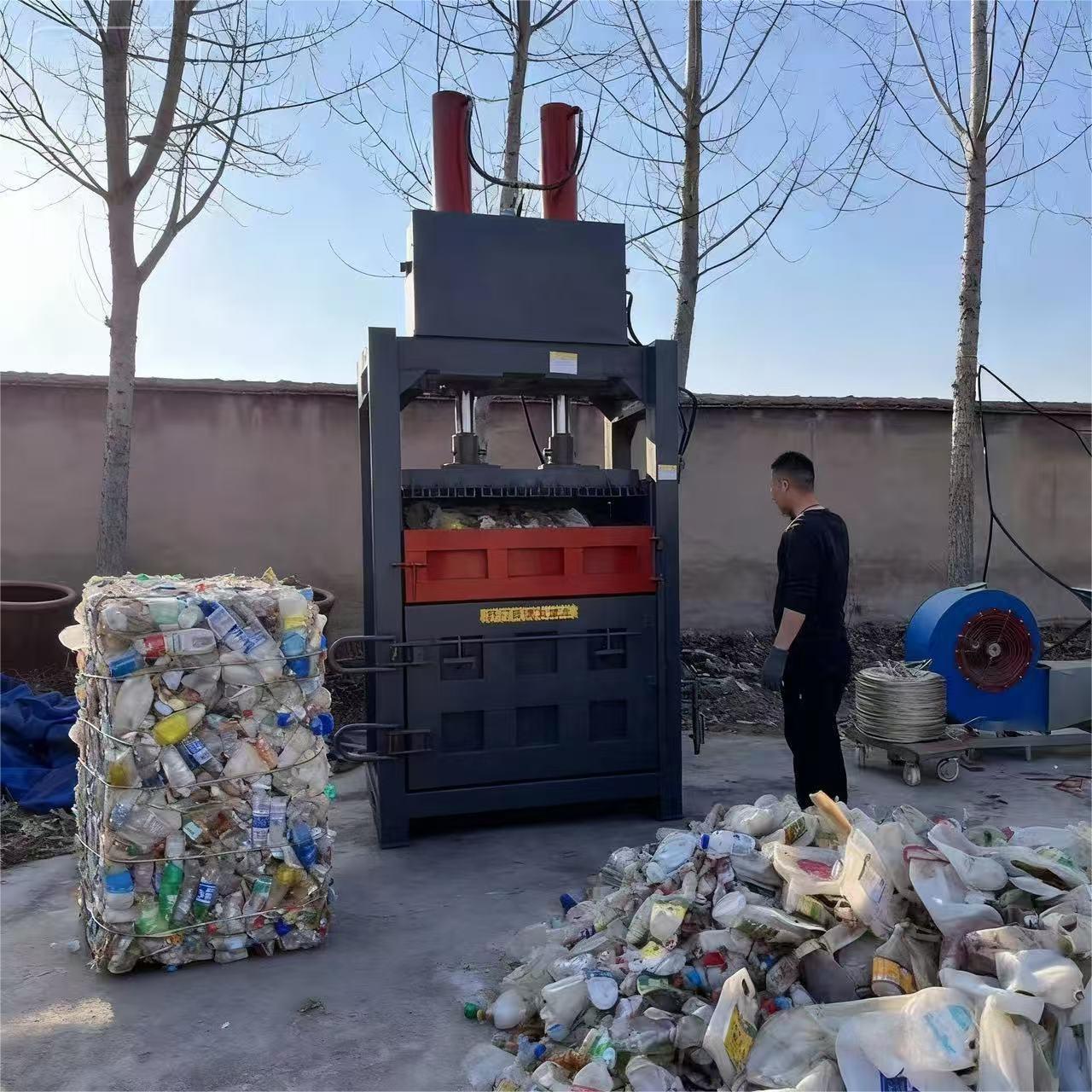 If you are running a recycling aggregation or waste management business in Lagos, Kano, or Port Harcourt, you likely face a serious headache every morning: the yard is overflowing with fluffy plastic bottles and loose cardboard, yet the truck heading to the recycling plant is completely full with barely any weight on it. This “volume vs. density“ problem is a silent profit killer for Nigerian recyclers.
According to recent data, Nigeria generates an estimated 32 million tons of solid waste annually, including approximately 2.5 million tons of plastic waste, while waste management infrastructure remains significantly underdeveloped. The Lagos State recycling economy alone generated up to 18 billion Naira in 2021, indicating enormous market potential. However, despite the huge green economy valued at approximately $250 billion, many Nigerian recyclers fail to maximize their profits because their waste is too loose.
For many local recyclers, the biggest challenge is not collecting the waste, but moving it. Loose scrap materials—whether it is PET bottles, waste paper, or plastic films—consume a massive amount of truck space. When transported without compression, this low-density scrap occupies excessive container space, forcing recyclers to move fewer tons per shipment, which significantly increases logistics expenses.
How much profit are you losing?
This is a question every Nigerian recycling yard owner should ask themselves. Many stakeholders still rely on manual labor or rudimentary methods. Yet companies like Chanja Datti in Abuja and Polysmart Packaging in Lagos are compressing PET bottles into tight bales for export, closing the loop between waste recovery and new production. The difference between their profitability and yours often lies in a single piece of equipment: the Vertical Hydraulic Baler.
When you sell loose plastics, what are you really selling? You are paying for air. A cubic meter of loose plastic bottles weighs virtually nothing, but it occupies the same space as a heavy bale. Conversely, a dense bale can weigh 400 to 600 kilograms, dramatically reducing the number of trips required and lowering fuel and freight costs.
You might already know you need to compress your waste, but why should you choose a hydraulic baler? Unlike simple mechanical presses, hydraulic systems provide steady, powerful compression force regardless of the material type.
Here is why upgrading to a waste paper baler machine or plastic baler machine transforms your business:
Compression Force That Saves Real Money
Our vertical hydraulic balers have a nominal compression force of up to 200 tons (2,000 kN), ensuring your waste is crushed into dense, uniform bales. This means more weight in the same trailer, which translates directly to lower freight costs per ton.
Versatility for Your Business
A high-quality machine should handle both materials. A vertical baler is perfect for crushing cardboard, paper, plastic, aluminum, and other materials easily. Whether you run a plastics-specific business or a general waste aggregation centre, our balers adapt to your needs.
Space-Saving Design for Improved Yard Organization
Vertical balers are ideal for facilities with limited space, requiring a minimal footprint while delivering professional bales. Organized bale storage not only improves yard safety but also makes it easier for buyers to assess your inventory, speeding up transactions and making your operations more professional.
Before you invest in any hydraulic baler in Nigeria, you need to be careful. Many recycling yard owners in Nigeria are tired of buying heavy machinery from overseas suppliers that don‘t understand local conditions—power fluctuations, high humidity, and the need for easy maintenance.
This is where Keepway stands out. When you purchase a hydraulic baler machine from Keepway, you are not just getting a steel frame. You get a comprehensive partnership based on integrity and responsiveness.
Durable Construction for Extreme Conditions
Nigerian recycling yards can be harsh environments. Our balers are constructed of high-quality materials built to withstand heavy-duty use, ensuring long-term reliability. This durability is critical for continuous operation in the Nigerian climate.
User-Friendly Operation
Training costs in the informal sector can be high if equipment is complicated. Keepway‘s baling machines feature intuitive controls that minimize training time and reduce the risk of operator errors. Your staff will be productive from day one.
The 24/7 Support You Deserve
The biggest complaint we hear from Nigerian importers is the lack of after-sales support. You buy a plastic baler machine overseas, it arrives at Apapa Port, and six months later when the hydraulic valve breaks, the foreign manufacturer disappears. Not with Keepway. We pride ourselves on honest communication and immediate technical assistance, ensuring your equipment investment doesn‘t turn into a yard ornament.
Nigeria is at a turning point. With the rise of circular economy initiatives supported by organizations like the Coca-Cola Foundation, which has provided aggregators with modern vertical balers to increase processing capacity, the market is shifting toward professionalization. The recycling economy in Nigeria has created over 250,000 jobs and continues to grow.
If you are ready to lower your logistics costs, increase your bale density, and secure a reliable, long-term partner in the recycling equipment industry, choose Keepway.
Click here to explore the full hydraulic baler series. Waste paper baler machine and plastic baler machine models are in stock and ready to ship. Contact Keepway now for a customized quote and transform your recycling yard from a chaotic dump into a profitable, high-density baling factory.
Mobile:+86-18206519878
Tel:+86-18206519878
Whatsapp:8618206519878
Email:sales@kbwmachinery.com
Add:Wanda Plaza, Fuqiao Street, Rencheng District, Jining City, Shandong Province, China