
Add: Wanda Plaza, Fuqiao Street, Rencheng District, Jining City, Shandong Province, China
+86-18206519878
When comparing an automatic poly mailer bagging machine, ask which tasks the quoted configuration performs and which tasks remain with an operator. A station may automate part of bag handling or closing while people still present products, manage labels, inspect parcels or collect the output. The word “automatic” alone does not define the whole packing process.
This guide helps a warehouse or e-commerce packing team describe that division of work before approving a configuration. Start with the actual product and mailer, then follow one parcel from preparation to dispatch. Record the included equipment and operator responsibilities rather than treating a product-family description as a specification for every model.
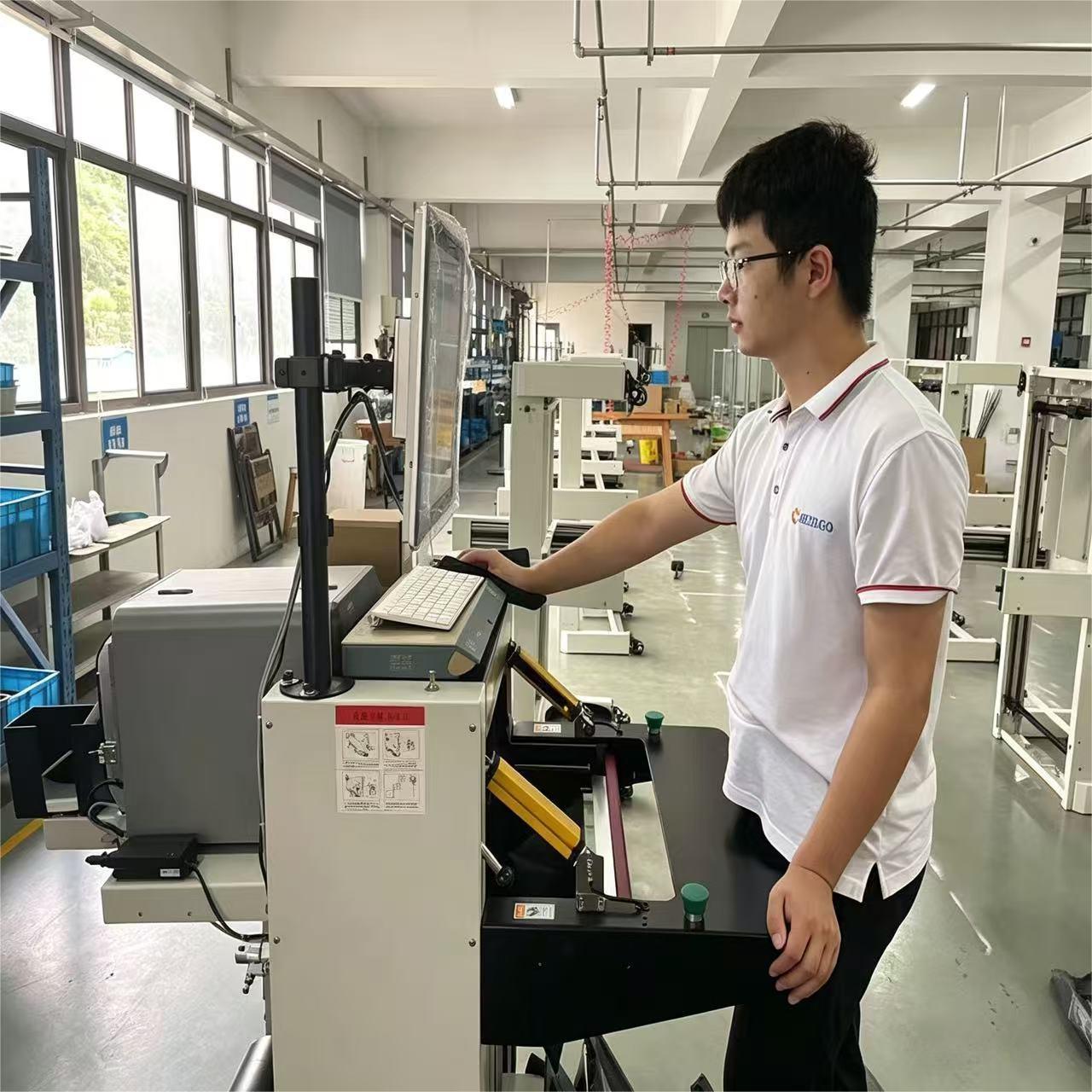
Order packing and empty-bag manufacture are different operations. The Keepway poly mailer bagging and sealing machine with label printing is for packing products and producing shipping labels or waybills. It does not manufacture empty bags, and its printing function is not flexographic printing onto bag film.
Describe the goods, the mailer supply format and the finished parcel. Include multi-item orders and the smallest and largest normal packs. Ask for the bag-opening, loading and closing arrangement that will be supplied for those samples. Do not assume that every courier bag, product shape or consumable roll works simply because the equipment is called a bagger.
Use the following questions to review a demonstration or quotation. Each answer should identify the actual machine module, an operator action or separate equipment. A task listed here is a point to confirm, not a standard capability claimed for the entire Keepway range.
| Stage | What to establish | Work to account for |
|---|---|---|
| Product preparation | How the correct items and quantity reach the station | Picking, checking, folding or arranging goods before loading |
| Bag presentation | The approved bag format and supplied feed/opening arrangement | Replenishment, bag-size changes and preparation of the consumables |
| Loading | Who or what places the goods in the mailer | Product orientation, clearance and any manual positioning |
| Closing | The supplied closing process matched to the actual bag | Keeping goods clear of the closure and inspecting the completed pack |
| Parcel identification | The printer, label-handling method and parcel-matching check | Applying or checking the label under the agreed configuration |
| Discharge and release | Where the finished parcel goes and who releases it | Collection, checking, holding exceptions and transfer to dispatch |
Review the map at the real workstation layout. An operator may need access to replenish bags while also loading goods or collecting parcels. Show the supplier those tasks and the available space so the proposed arrangement can be assessed as a complete station.
A printed shipping label still needs to reach the intended parcel. Confirm whether application is performed by an operator or by a specified applicator, where the parcel is presented and who checks the match. Include those components and responsibilities in the quotation.
For the linked Keepway bagging and sealing machine, shipping-label printing is confirmed. That function should not be read as a statement that an automatic label applicator is included. Other models need their own configuration review; this description does not establish their loading method, application equipment or software capability.
Use the filled-mailer label placement trial to check physical placement and readability. For order data, interfaces and implementation responsibilities, refer to the separate ERP/WMS integration quotation checklist. Neither a scanner nor a monitor in a photograph proves a completed system connection.
During an agreed sample trial, follow the same product mix, bag range, operator arrangement and parcel checks that the purchase is intended to support. Record acceptable completed parcels over the agreed time, together with manual tasks and any held or reworked packs. A closing-cycle figure cannot, on its own, establish the output of the whole station.
Watch where work accumulates. Are products waiting for loading, labels waiting for application or completed parcels waiting for collection? Describe those observations before choosing extra equipment. The next useful change depends on the actual constraint; a faster individual step does not guarantee that the other tasks can keep pace.
Agree whether the observation includes bag replenishment and the normal size changes required by the job. Use the delivered instructions and a trained operator for machine actions. For detailed job changes and reprints, use the existing bagging label changeover checklist rather than assuming a particular recovery sequence.
A useful quotation identifies the bagger, consumables requirements, printer and any separate applicator, conveyor or loading arrangement. It should also identify operator tasks, installation requirements and the sample conditions used for any stated output. An attractive demonstration layout does not establish that every item visible is included in the base machine.
Compare the proposals against the same task map. If one leaves label application or collection to an operator and another includes extra equipment, record that difference explicitly. Do not turn an assumed automation level into a promised labor reduction or cost saving.
For the wider equipment comparison, use the poly mailer bagging machine selection guide. For this station, request a configuration review with your product, bag and operator-task brief. The review should establish the supplied functions and the remaining work before the arrangement is approved.
Mobile:+86-18206519878
Tel:+86-18206519878
Whatsapp:8618206519878
Email:sales@kbwmachinery.com
Add:Wanda Plaza, Fuqiao Street, Rencheng District, Jining City, Shandong Province, China