
Heavy pallet wrapping starts with two separate checks: can the machine carry the load, and can the load remain stable while it moves? Weight capacity alone cannot answer both questions. Record the loaded pallet dimensions, total weight, stack condition and handling method before selecting the wrapping arrangement.
Check the load · Choose the arrangement · Prepare an enquiry
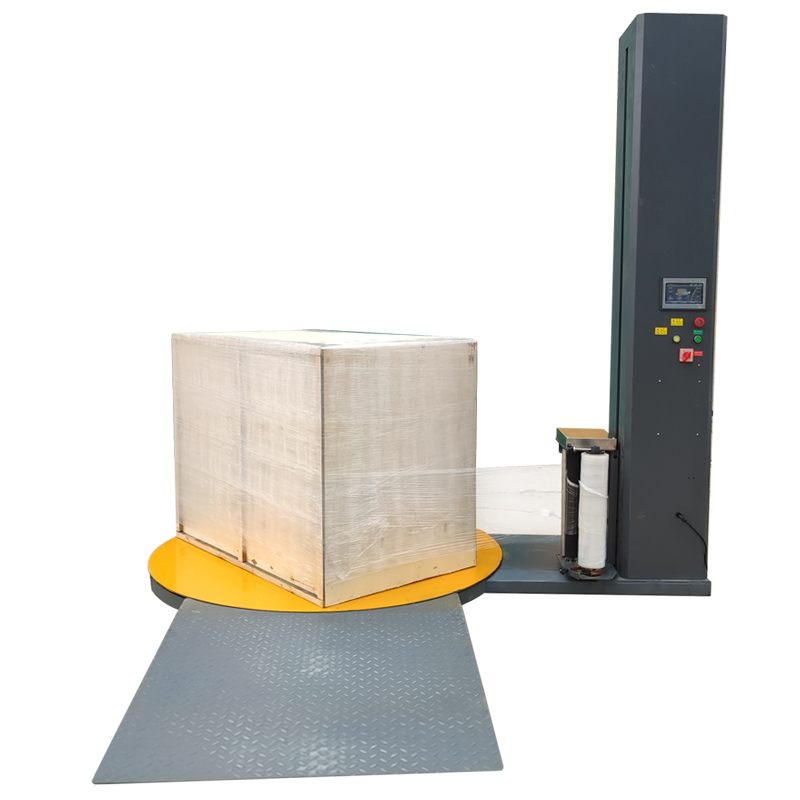
1. Describe the loaded pallet, not just its base
Weight and footprint
Include the pallet in the total weight. Measure the widest loaded length and width, including any overhang. Record the loaded height and the smallest as well as the largest pallet you need to run.
Stack condition
Identify leaning layers, tall narrow stacks, loose items, soft cartons and an uneven top. Explain whether the load is already unstable before wrapping. Film cannot replace a sound pallet and an appropriate stacking method.
Photograph the complete load from the side and above when practical. For mixed products, identify the heaviest, tallest and least stable examples; they may require different settings or a different machine arrangement.
2. Decide whether the pallet should rotate
Turntable arrangement
The pallet rotates while the film carriage moves vertically. Consider this route when the load can be safely positioned and rotated within the confirmed size and weight limits. Review both the loading method and the behaviour of the load during acceleration and stopping.
Stationary pallet arrangement
If load movement is unsuitable, review a wrapping route in which the pallet stays in place. A mobile wrapper needs a suitable floor and operating clearance around the load. A rotary-arm system requires a separate layout and configuration review.
Compare wrapping arrangements before selecting a model.
3. Separate the standard machine from custom options
KPW-T1650 is the standard turntable model; T1850 is the custom configuration. The current standard product lists a 1650 mm turntable and a load rating up to 2000 kg. These figures do not establish that every 2000 kg load is suitable: the footprint, height, weight distribution and handling route still need checking.
Custom work can cover turntable size, a top platen and mast height. Send actual pallet and load dimensions to define those changes. Do not infer a turntable diameter or a larger weight rating from the T1850 model name.
4. Agree what the trial must demonstrate
- Use representative goods, the proposed pallet and the intended film.
- Check positioning, rotation or machine travel, film coverage and how the film is attached and finished.
- Inspect for crushed edges, displaced layers, film breaks and loose film tails.
- Time loading, wrapping and unloading separately. Record complete acceptable pallets per hour for the agreed handling method.
- Assess the wrapped load using the transport and handling checks appropriate to your operation. Record acceptance criteria before the trial.
For route dimensions and loading equipment, complete the loading access checklist. If a strap is also needed for the application, review strapping versus stretch wrapping; the two processes perform different jobs.
Send one complete load brief
Include loaded length × width × height, total weight, pallet base, photos, loading equipment, required output and available power. Flag fragile tops, overhang or unstable layers so the configuration can be reviewed before quotation.
Discuss my pallet loadCompare standard and custom options