
A banded stack can look square when it leaves the bench and arrive with a few sheets protruding. To see where movement starts, follow the same stack from banding to the receiving station. Measure the edge that the next operator actually uses to load a tray, fit a sleeve or present the pack.
Choose the receiving edge and agree on the limit
Ask the receiving operator to identify one reference edge, such as the folded spine or the long trimmed edge. Mark its direction on a sample tray or a spare backing sheet. Agree on the largest acceptable sheet protrusion in millimetres, and whether a crease, scuff or loose sheet would also cause rejection. The tolerance belongs to your downstream process.
Measure the same stack at three points
- Before banding. Square the sheets using the usual bench method. Record sheet length and width, stack height, sheet count, coating and band position. Lay a straightedge alongside the reference edge without pushing the sheets back into place. Note the largest offset and take a side-on photo with a scale.
- After banding, before lifting. Use the same reference edge, orientation and scale. Record the offset again, the position of the band and any corner mark. If the group has already moved, compare how it was aligned, held and banded at the bench.
- At the next station. Follow the usual lift, tray and transfer route. Before the recipient straightens the pack, measure once more and check whether it enters the actual sleeve or tray. An offset that first appears here gives you a reason to repeat the trial with the same grip and support.
Keep a record the two operators can compare
Use one line per stack. Include your thinnest and tallest usual stacks, and a coated stock if its surface behaves differently. If you change a band position or the way a stack is supported, change one item at a time and repeat the transfer.
Sample ID ___ Sheet L × W / stack H (mm) ___
Reference edge / allowed offset (mm) ___
Largest offset (mm) before banding ___ / after banding ___ / after transfer ___
Receiving check sleeve or tray fit ___ / visible damage ___ / accept or repeat ___
Prepare a tabletop banding inquiry
For the KPW-SDJ150 tabletop bander, include the stack width and height at the proposed band position, along with sheet length, the reference edge and your permitted offset. Photographs from the bench and the receiving station help show where a change first appeared.
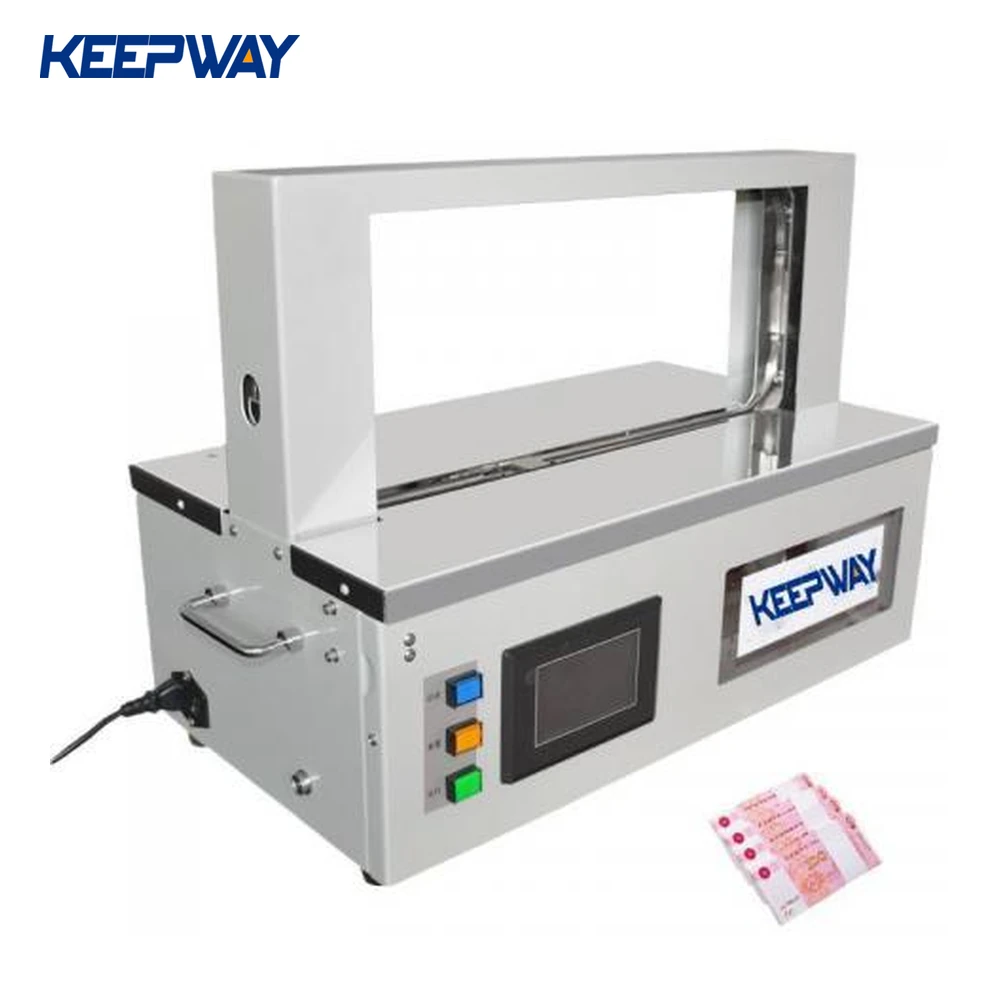
Ask about a paper-stack sample trial and describe the movement that the finished stack must withstand. If your product is a cable or hose coil, the open-arch coil bander has a separate check for the coil opening and local section.