
A cable coil can reach the next workstation with its shape intact and still cause a delay. The end the operator needs may sit under a band, face the wrong way in the carton, or look identical to the other end. Before asking for a coil-banding trial, agree with the person who opens the pack on which end they need and when they need to reach it.
Start with the first task after unpacking
Ask the receiving operator to show how the coil arrives and what they do first. They may need to scan an end label while the coil is still packed, identify a connector before lifting the coil out, or reach the outer end only after removing the packaging. Photograph that starting orientation. Mark the required end on the photograph and note which face of the coil is visible in the carton.
Use the shop's own terms for the ends. If both ends have connectors, identify each by the feature the operator actually uses, such as a connector type or an existing part label. Ask whether labels, caps or protective sleeves already fitted to the sample must stay in position.
Give the trial operator a band-position drawing
On a face-view photograph, mark the proposed band positions and any area that must stay clear around the required end, connector or identification label. Add a side view showing where the lead sits relative to the coil wall. State whether the same face must stay uppermost after packing. An outside diameter alone cannot describe this arrangement.
Compare the sample at three handovers
| Handover | What to observe | What to keep |
|---|---|---|
| At the banding station | Can the packer identify the required end and place it in the agreed area without trapping the label or connector? | A face view of the banded sample with its job reference. |
| After normal packing and transfer | After putting the coil into its usual carton or tote, is the required face still presented as agreed? | A photograph from the receiver's viewpoint before opening the pack. |
| At the receiving station | Can the operator carry out the agreed first task? Record any search, reorientation or label damage. | The observed result, the operator's acceptance and any requested change. |
Compare candidate band positions using the same coil, pack orientation and handover method. Include a second representative coil if the connector size or winding pattern changes between order lines. If one sample fails, identify the step where the end moved or became hidden before changing the next sample. Where the coil stores spring energy, use the receiving site's approved handling and unpacking procedure.
What to send with a sample request
Send the coil outside diameter, centre opening, local wall width and stack height, plus the two marked photographs. Give the number of bands you want to assess, the actual band material if known, the intended carton orientation and the receiving task. Agree on an observable pass condition, for example that the receiver can identify the marked end in the packed orientation. Ask the supplier to return the same views with the trial result.
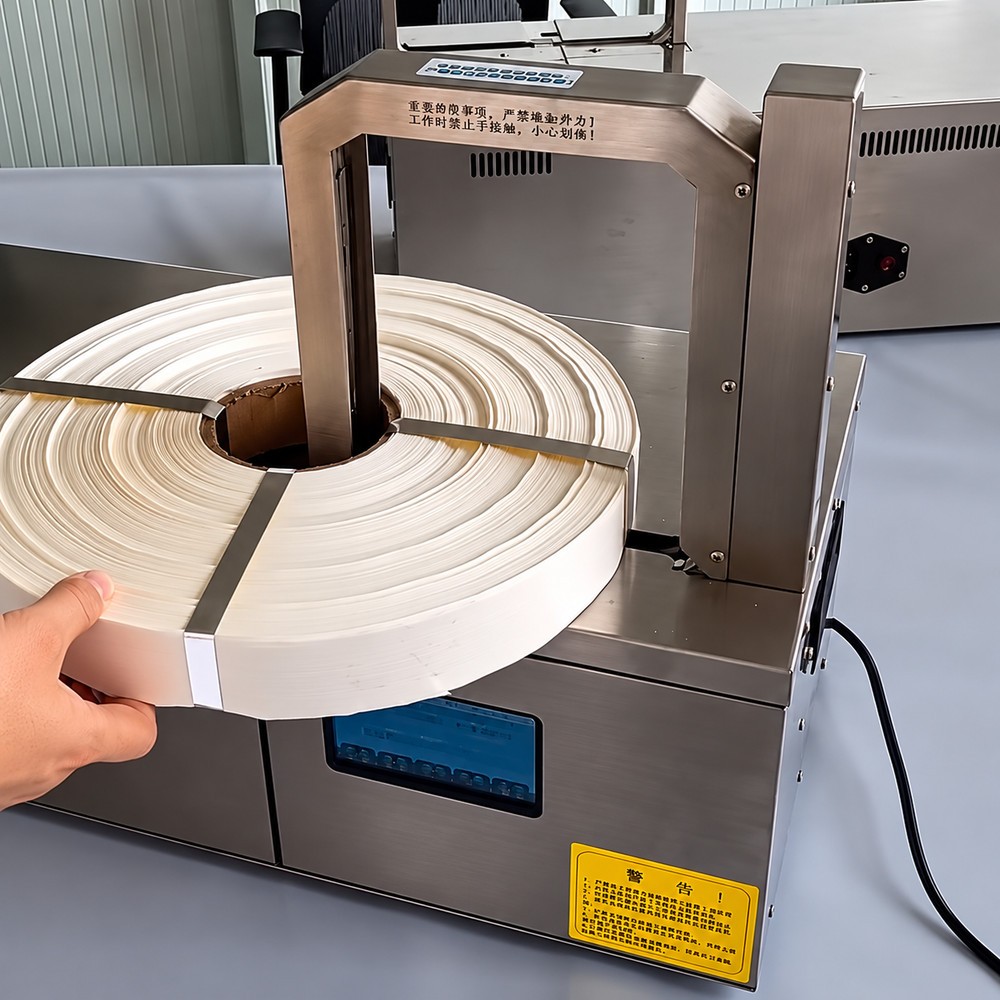
For cable or hose coils with a centre opening, review the KPW-1216 open-arch coil bander. Use the coil sample inquiry form to describe your dimensions and lead-end requirement, and ask how to share your photographs.