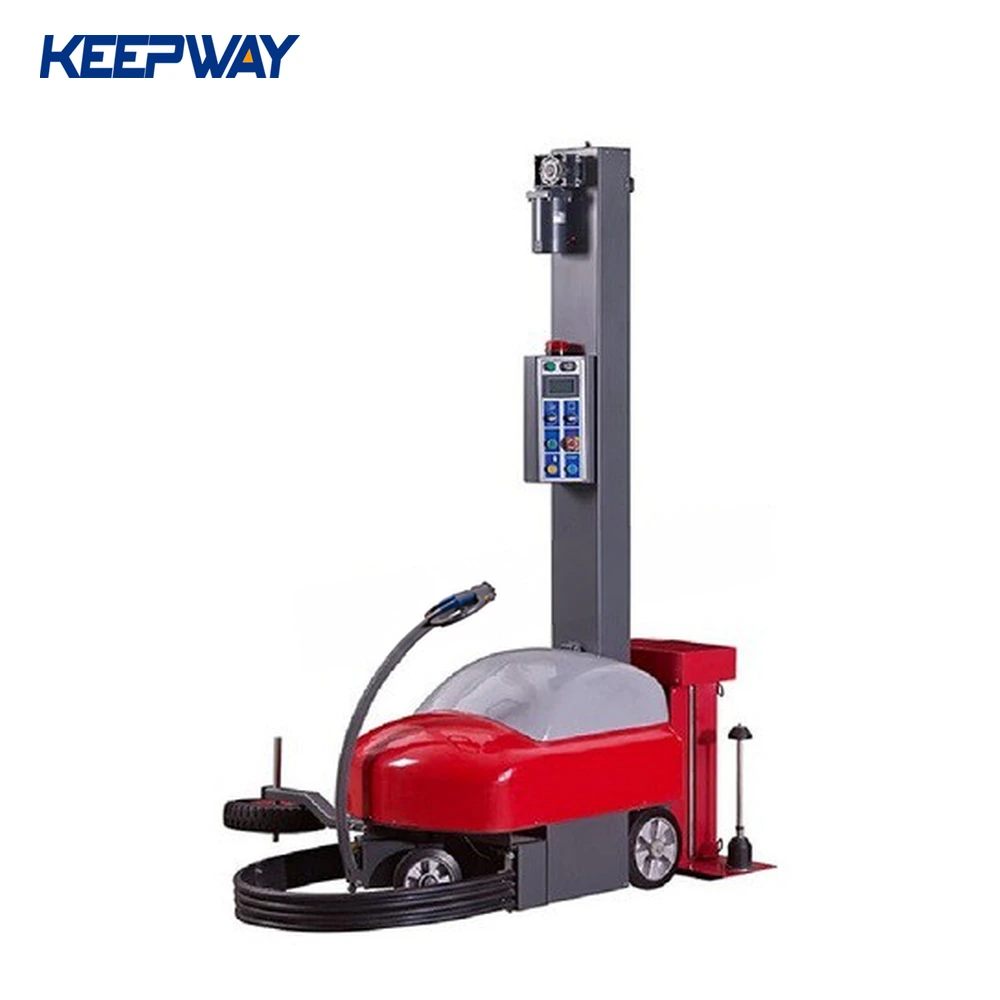
A robot wrapper finishes its cycle, yet the top row of cartons still has a bare strip. Before ordering a taller mast or a different sensor, find out where the film actually stopped. A carriage that turns back early, film that reaches the top but slips down, and a short stack beside a taller carton leave different clues.
Mark the edge you need the film to reach
Photograph the stationary load from the side before wrapping. Mark the required upper film edge on the photo. Measure from the floor to the top of the palletized load, including the pallet itself. On a stepped load, record the highest carton and the lower shoulder separately. Agree with the receiving team which side faces need covering and how much exposed carton they can accept. If the entire top face needs a dust cover, include a top sheet in the packaging review.
Compare two loads on the same approved program
Start with a stable, level load that the line wraps successfully. Compare it with a dark load of the same height and shape, if available. Use the same film, program and starting conditions. For a separate shape test, compare a level top with a stepped top using the same outer packaging. If both the colour and the stack change together, record both differences and keep the cause open.
Have the operator run the normal cycle. Observe from outside the robot’s travel path. After the cycle has stopped, photograph each side from the same position and measure the uncovered strip at the highest carton and the shoulder. Record whether the carriage turned back early or reached the expected level. A short video from a fixed position can help the supplier distinguish the two.
Match the observation to the configuration review
- Only the dark load is missed. Send the paired load photos, actual heights and the point where the carriage reversed. Ask the supplier to demonstrate height detection on that finish using the sensor included in the quotation. If a different sensing option is proposed, repeat the trial with that exact option.
- Both loads stop at about the same height. Compare the measured load height with the working height on your machine order. Have the supplier review the approved program and travel range. A taller mast is worth quoting when the required height exceeds the confirmed working range.
- The carriage reaches the expected level, but one face remains exposed. Mark where the film first covers the edge and where it finally rests. On a stepped stack, identify any film spanning a gap beside the upper carton. Ask for a trial of a revised stack pattern or top-wrap program and repeat the four-side inspection before accepting it.
KEEPWAY specifies automatic load-height sensing on the KPW-Z4510 self-propelled pallet wrapper. Confirm the working height and the sensor supplied for your order. For an industry example of why sensor choice matters, the Robopac S6 manual, section 3.5, lists a separate option for predominantly black loads.
What to send for a trial quotation
Include the load footprint, total height, upper-layer shape, surface colour, film used and the narrowest clearance around the pallet. Attach the marked before-and-after photos. Ask the supplier to return the measured result for each side, the tested configuration and any change that needs another trial.
One line per load
Load ID and finish ___ Total height ___ mm Shoulder height ___ mm
Program / film ___ Carriage reversal observed ___
Exposed strip on sides A / B / C / D ___ mm Agreed limit ___ mm
Accept, revise or retest ___ Proposed change ___