
Buyer planning guide
A neatly wrapped profile can hide the surface you need to approve. If you plan to wrap painted, polished or otherwise finish-sensitive products, include an unpacked sample in the buying decision. Coverage, handling and the condition revealed after film removal should have separate acceptance records.
This guide proposes a buyer-and-supplier sample review. It does not promise scratch-free wrapping, prescribe machine settings or replace the equipment supplier's operating instructions.
1. Define the surface that must remain acceptable
Start with the actual product rather than a general request for “protective wrapping.” Identify the material, finish, cross-section, length and weight. Mark the presentation face, edges and any areas that may contact supports. If products travel as a bundle, show the bundle arrangement and any separators used between pieces.
Agree what the receiving team will inspect after unpacking. Examples to discuss include visible scuffs, pressure marks, transferred material, residue or changes in appearance. These are inspection categories, not predicted defects. Let the product owner define acceptable condition using an approved reference sample or photographs; this guide sets no universal cosmetic tolerance.
2. Keep a useful before-wrapping record
Give each sample an identifier that stays with its photographs and test record. Photograph the agreed faces and edges before the trial, under lighting that makes the relevant finish visible. Mark existing blemishes in the record, not on a sensitive surface unless the product owner approves the marking method.
Use comparable views after the trial. Keep an unprocessed reference sample where practical, especially if normal handling already leaves marks. Record any protective film, sleeve or interleaf already supplied on the product. Otherwise, the trial may compare different starting conditions without anyone noticing.
3. Review every contact and transfer point
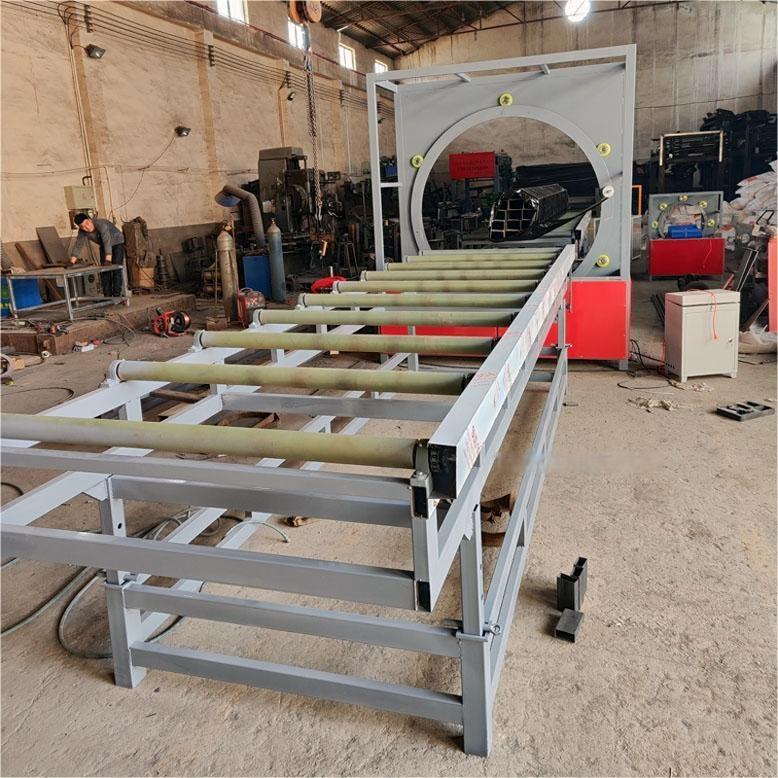
On a simple line sketch, identify loading, infeed support, passage through the ring, outfeed support and unloading. Mark the faces that touch each support and where handling changes. Ask the supplier to review the intended product orientation and support arrangement, including the shortest and longest pieces in your range.
The Keepway horizontal orbital wrapper is offered with conveyor configurations selected around the product section, length, weight and layout. A photograph of a roller conveyor does not establish that its contact surfaces or spacing suit your finish-sensitive product.
Ask for a representative run showing loading through discharge, plus close-ups of the finished sample. Record extra supports, guides or protective materials used in the demonstration and whether they belong in the quotation. Supplier personnel should follow approved operating procedures; observations must not require reaching into moving equipment or defeating guards.
4. Inspect once wrapped, then again after removal
First record the wrapped condition: coverage, visible product movement, exposed areas and any unusual contact points. Then have the sample unpacked using the agreed safe method, with the machine stopped and the sample in an appropriate inspection area. Record when film was removed and how the sample was handled between wrapping and inspection.
Compare the same faces and edges with their baseline photographs. If a mark appears, record its position, shape and photograph reference before proposing a cause. Do not automatically blame film tension, a roller or the coating. Ask the relevant suppliers to review the evidence and agree any controlled comparison needed.
If products are normally stored wrapped, agree a later inspection interval that reflects the intended process. An immediate check cannot establish long-term surface compatibility. Likewise, a successful cosmetic review does not establish weatherproof packaging or protection through every shipping route.
5. Separate coverage approval from surface approval
Use two decisions for the same sample. One records whether the agreed wrapping coverage was achieved. The other records whether the exposed product meets the agreed surface condition after unpacking. A sample may meet one requirement while needing further work on the other.
Record the film supplier and product reference, width and thickness, machine configuration and supplier-approved setup reference. Keep these details with the contact sketch. Change one identified variable at a time where practical, and retain failed samples for comparison rather than relying on a new video alone.
Keepway's current orbital-wrapper page lists stretch film for the standard configuration. Non-woven fabric and composite paper require an optional carriage. Do not assume that changing the wrapping material is possible on the quoted configuration or that it will resolve a surface issue without another review.
6. Attach a short acceptance record to the quotation
Use one record for each product, material and configuration combination:
- Sample: identifier, material, finish, section, length, weight and bundle arrangement.
- Baseline: approved faces, existing marks, photograph IDs and acceptance reference.
- Handling: orientation, contact sketch, supports, guides and loading/unloading method.
- Wrapping: material reference, machine configuration and setup reference.
- Inspection: wrapped condition, unpacking method, inspection time and after-photograph IDs.
- Decision: coverage accepted/review; surface accepted/review; unresolved point, owner and next action.
Approve the tested combination rather than every future product. A different coating, bundle arrangement, contact material or wrapping material may need a focused repeat review. If you are still choosing the wrapping method, compare the wrapping equipment range before arranging samples.
Send your product drawing, finish requirements and contact-layout sketch for an orbital-wrapper configuration review. Sample arrangements and acceptance criteria are agreed for the enquiry; this worksheet contains no measured Keepway trial result.