
Add: Wanda Plaza, Fuqiao Street, Rencheng District, Jining City, Shandong Province, China
+86-18206519878
A useful elastic cord tying trial starts before the machine is switched on. For flower growers, produce packers and wholesalers, the practical question is whether a prepared bundle stays together, looks acceptable and moves through the packing station without unnecessary rehandling. A tidy demonstration bundle alone cannot answer that question.
Use this sample preparation and acceptance checklist to turn your normal packing requirements into a clear discussion with a machine supplier. It is a proposed buyer checklist, not a report of completed flower or vegetable testing.
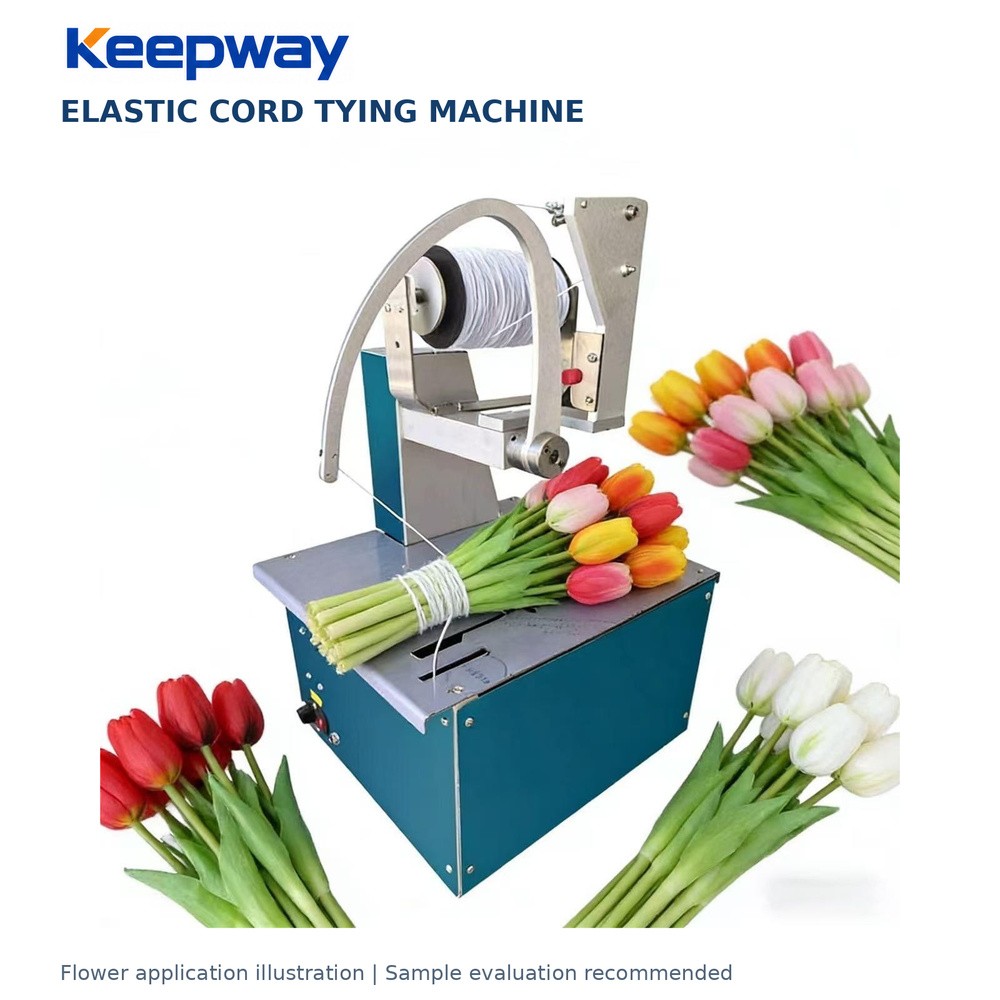
Start with one product and one packing format. Record the flower or vegetable type, stems or pieces per bunch, overall length, and bundle width and height where the cord should sit. Include the number of ties and the distance between them if your finished product needs more than one.
Photograph an acceptable manually tied bundle beside a ruler, including a close-up of the tie. Mark the preferred tie position on a copy of the photo rather than relying on a description such as “near the bottom.” State what must remain clear: leaves, flower heads, labels or a trimmed end.
Choose typical bundles plus the smallest and largest sizes you routinely pack. Include relevant variation in stem thickness, arrangement and product condition. For vegetables, describe whether bundles reach the tying station dry, damp or after washing. For flowers, describe their condition at the point of tying, rather than sending only an unusually neat display bunch.
Label each sample group and record its dimensions before testing. Keep the packing format consistent within each group so that a change in result can be discussed against a known starting point. Agree sample quantity, shipping arrangements and arrival condition with the supplier before sending perishable goods.
If physical samples are not yet available, send clear photos and a short video of your current preparation and tying workflow. Use that information for an initial review, then agree what still needs a representative trial before accepting a configuration.
A tie that holds firmly is not automatically an acceptable retail finish. Define two separate checks: whether the bundle stays together through the handling you require, and whether the contact area looks acceptable. Show the supplier examples of acceptable and unacceptable results rather than asking only for a “tight tie.”
Inspect the result immediately and again after the handling or holding period relevant to your business. Record that period and the conditions. This creates an agreed acceptance method without treating a brief demonstration as proof of storage or transport performance.
For a manually handled tying station, assess preparation, positioning, tying and removal together. If two ties are required, include repositioning. Record completed acceptable bundles separately from trials that need retying or adjustment; counting tying actions alone does not describe usable output.
Also note where the operator collects loose stems, places finished bundles and replenishes cord. A trial should help you identify whether the main delay is tying or another packing step. Follow the supplier's operating instructions; adjustments, threading and clearing must use the specified safe procedure.
Identify the intended cord specification and ask which consumables are approved for the proposed configuration. Record the cord used during the trial so that a successful result is not separated from the material that produced it. If you already buy cord, provide its specification rather than assuming it is interchangeable.
Describe expected leaves, trimmings, moisture and other residue around the station. Ask for the cleaning method, access requirements and maintenance instructions applicable to the quoted unit. For produce packing, state any food-contact documentation requirements for the cord and its intended use. Application suitability and required documentation should be confirmed for your own packing conditions and market.
The Keepway elastic cord tying machine for flowers and vegetables uses a cord-and-knot process with manual bundle preparation, positioning and removal. Its product page provides configuration references and a demonstration using white bundles and a blue hose coil; that footage is not a flower or vegetable trial.
For a focused quotation, send your product photos, typical and size-limit bundle dimensions, intended tie positions, required ties per bundle and target finished output. Add your power supply, delivery destination, cord preferences and cleanup requirements. Attach the acceptance checks above, with your own agreed limits.
Ready to review your bundles? Send your sample details through the product inquiry form to discuss a suitable configuration and the next steps for evaluation.
Mobile:+86-18206519878
Tel:+86-18206519878
Whatsapp:8618206519878
Email:sales@kbwmachinery.com
Add:Wanda Plaza, Fuqiao Street, Rencheng District, Jining City, Shandong Province, China