Add: Wanda Plaza, Fuqiao Street, Rencheng District, Jining City, Shandong Province, China
+86-18206519878
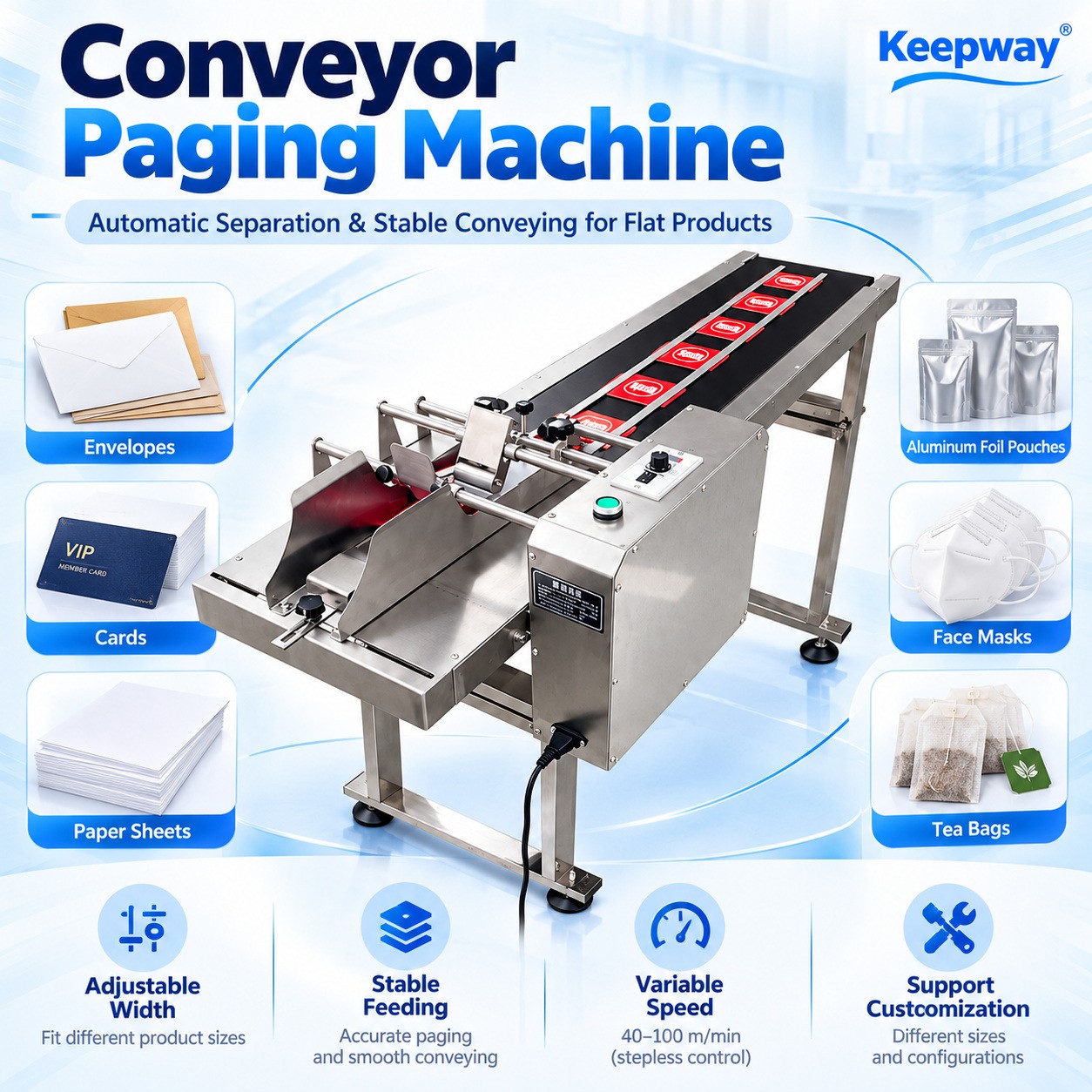
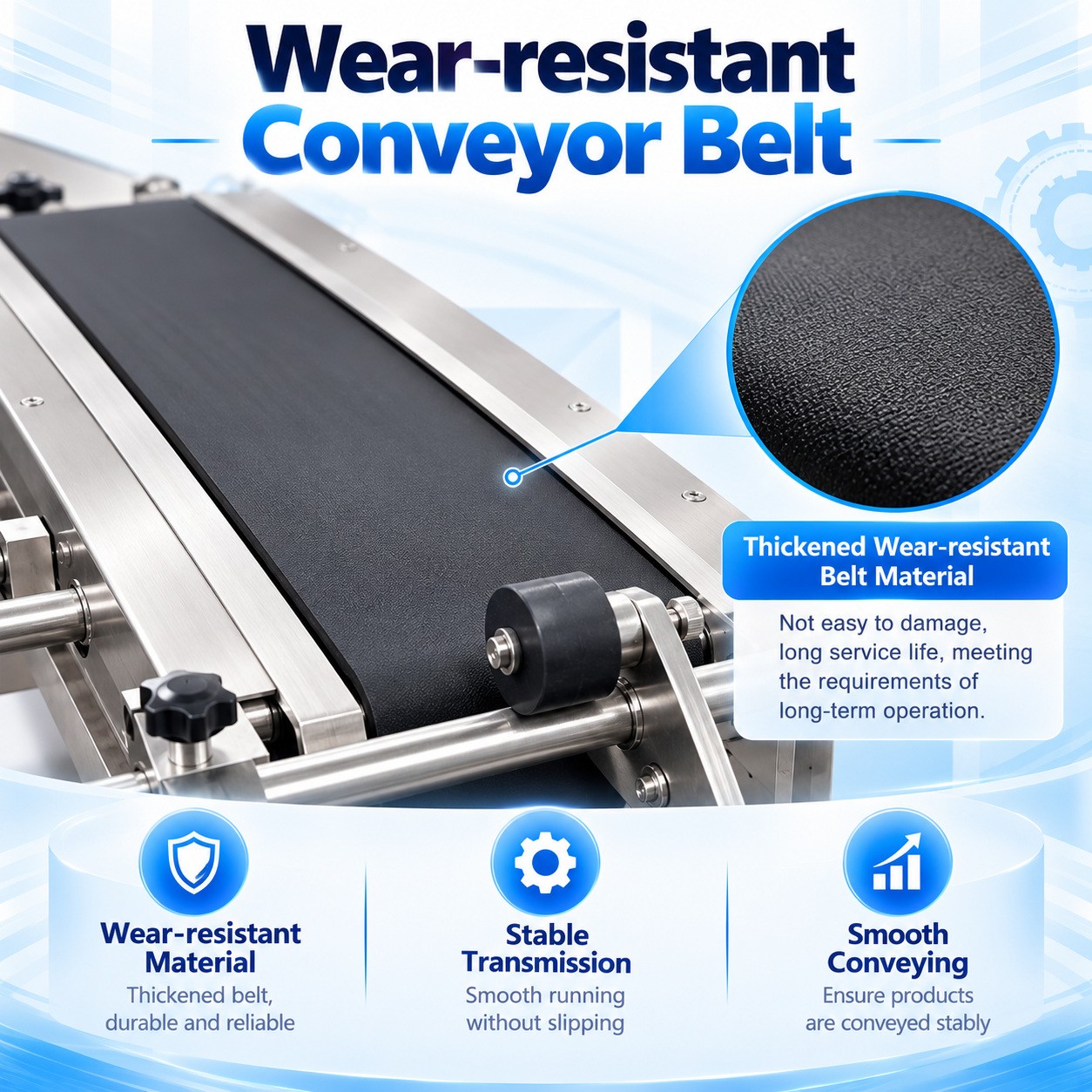
The KEEPWAY KPW-9001 and KPW-9005 conveyor friction feeders separate suitable stacked flat products and carry them along a belt toward a receiving point. Also known in the trade as a conveyor paging machine, this floor-standing design combines an adjustable separation area with a conveyor section.
Start with the sample: the confirmed complete-item thickness range is 1–5 mm. Choose the model by product width, material behavior and the next process. Send your product details for a feeder review.
Rigid cards, paperboard inserts, folded printed items, envelopes and flat pouches are application candidates when the complete item meets the model’s width and 1–5 mm thickness limits. Check feeding orientation, stiffness, seams, surface finish, curl and thickness variation.
Ordinary single sheets, thin film and many empty pouches are below 1 mm and fall outside this stated range. The illustrations do not establish compatibility with every paper, mask, tea bag or filled package. Irregular or bulky products need a separate assessment.
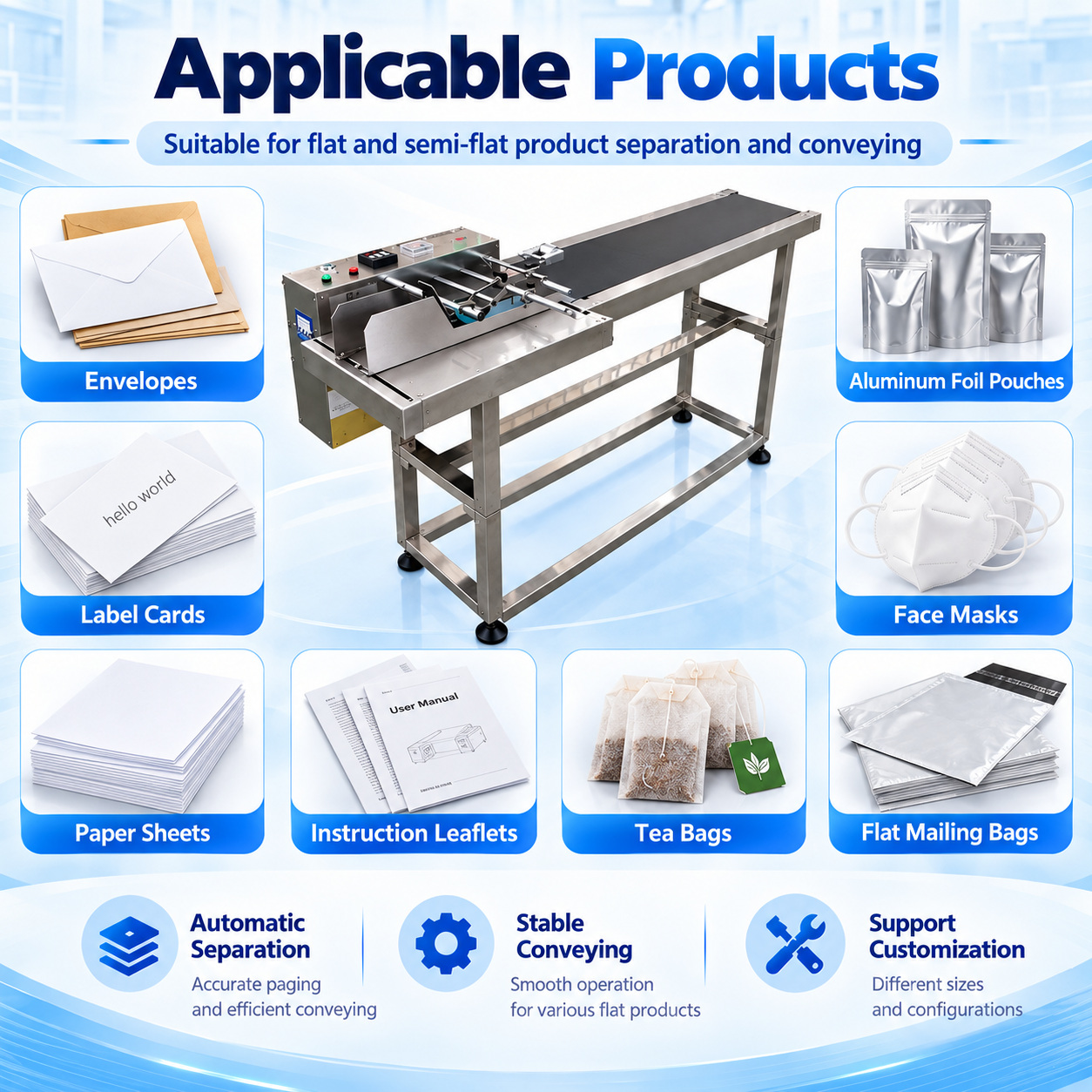
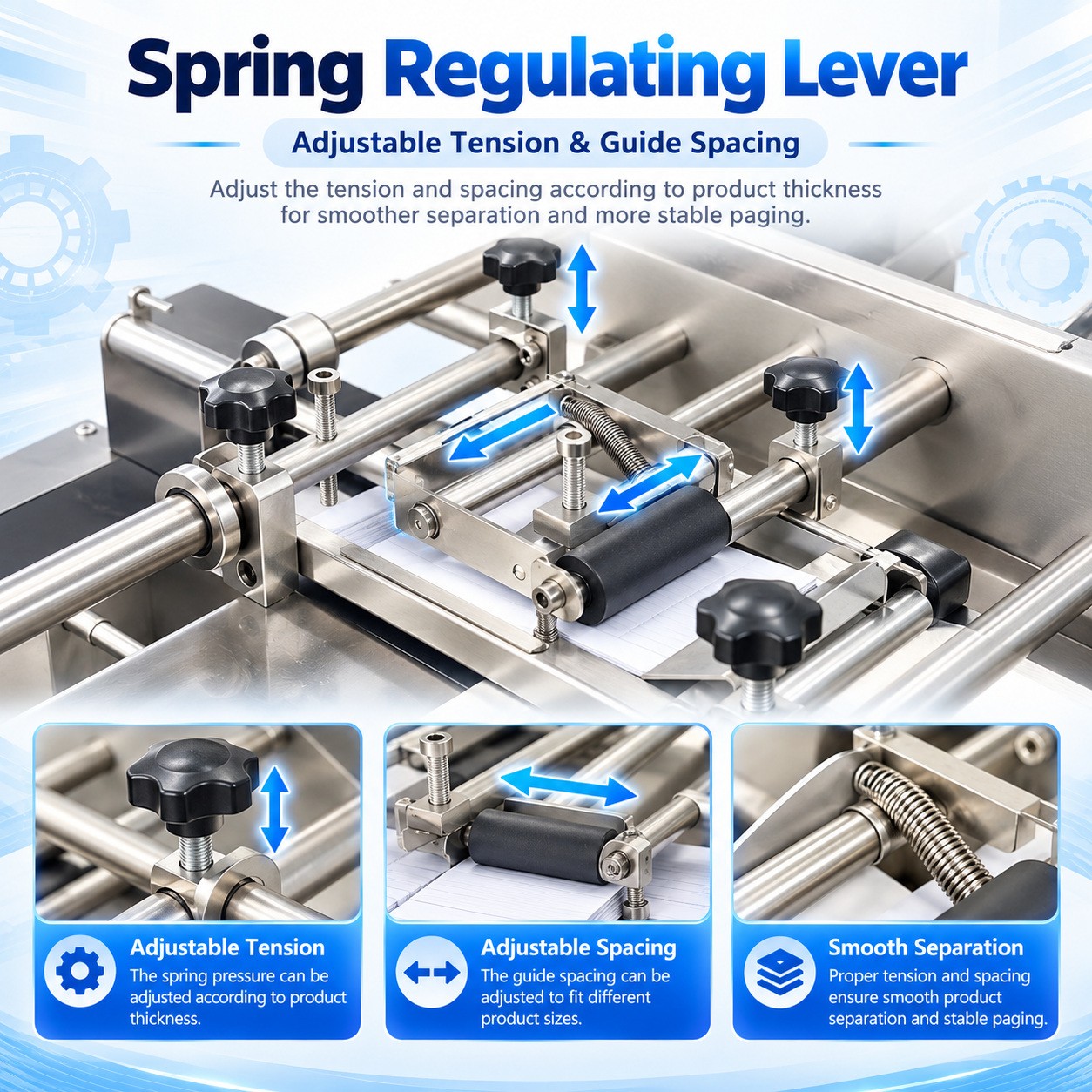
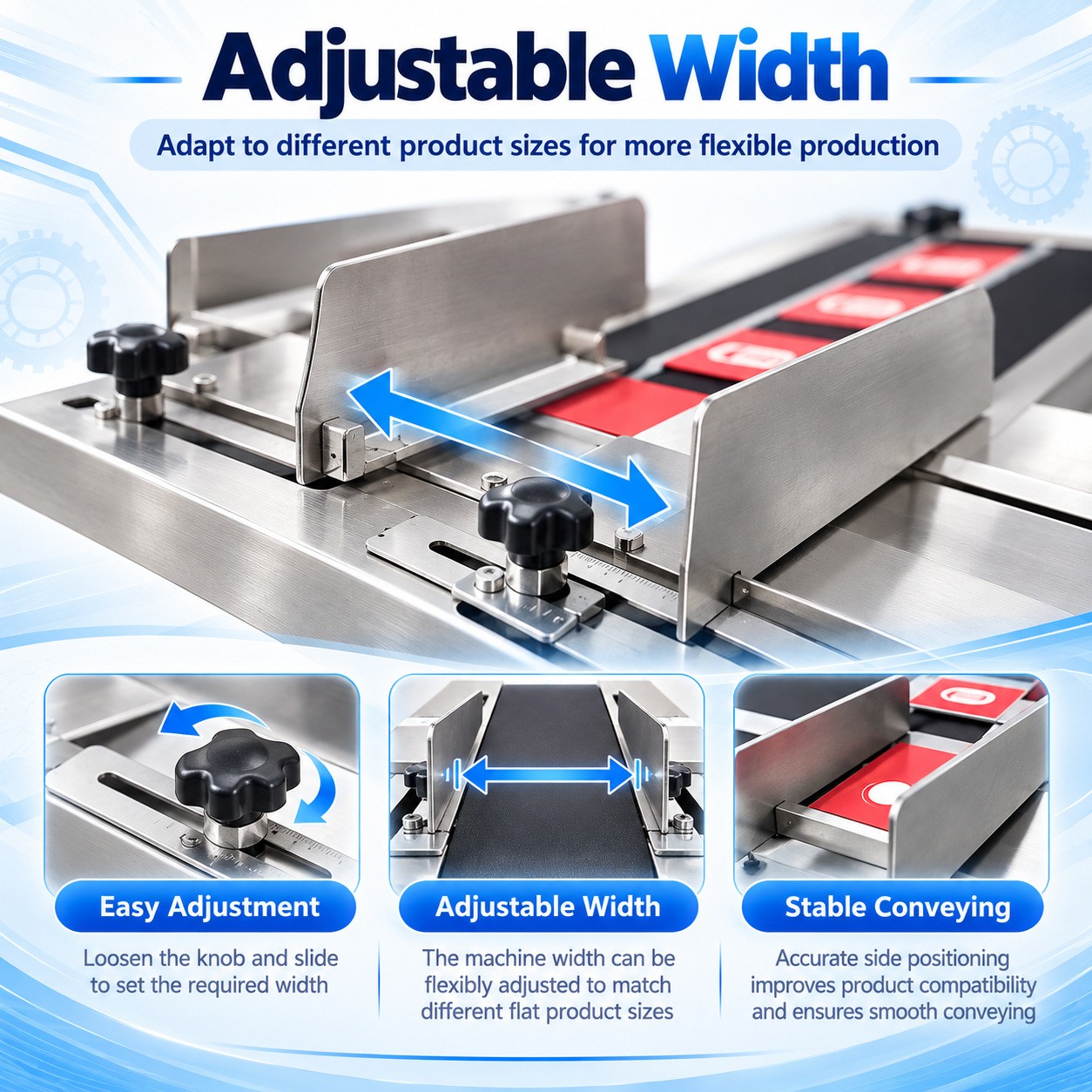
Friction in the feeding area draws a suitable item from the stack. Guide spacing and the separator/roller arrangement are adjusted for that sample; the conveyor carries the separated item toward the receiving process. Evaluate overlap, skew and consistent movement rather than assuming every material feeds identically.
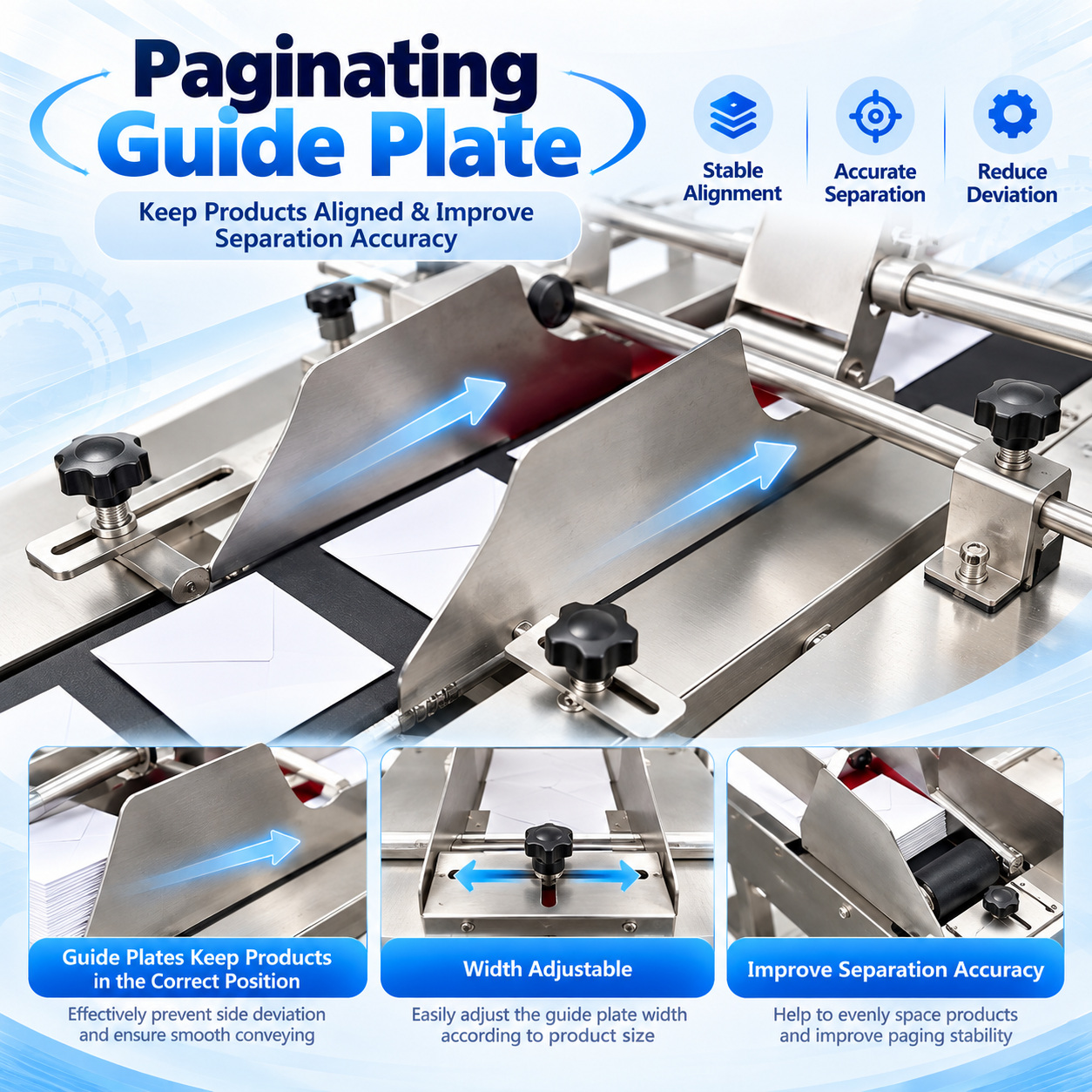
| Parameter | KPW-9001 | KPW-9005 |
|---|---|---|
| Supported product width | 80–360 mm | 100–500 mm |
| Belt width | 360 mm | 500 mm |
| Complete-item thickness | 1–5 mm | 1–5 mm |
| Belt linear speed | 40–100 m/min | 40–100 m/min |
| Power supply | 220 V / 50 Hz | 220 V / 50 Hz |
| Power rating | 180 W | 370 W |
| Speed adjustment | Variable-frequency stepless control | Variable-frequency stepless control |
| Overall dimensions (L × W × H) | 1420 × 630 × 900 mm | 1600 × 710 × 1040 mm |
40–100 m/min is belt travel speed, not pieces per minute. Accepted output depends on item length, spacing, separation behavior, replenishment and the receiving process. Product-length limits and downstream control interfaces require review; belt width alone does not confirm compatibility.
A feeder conveyor can provide transport before separately specified inkjet coding, marking or inspection equipment. Review product position, working height, mounting space and any required trigger or control interface. Specify printers, cameras, vacuum requirements and synchronized transfer separately in the project scope.
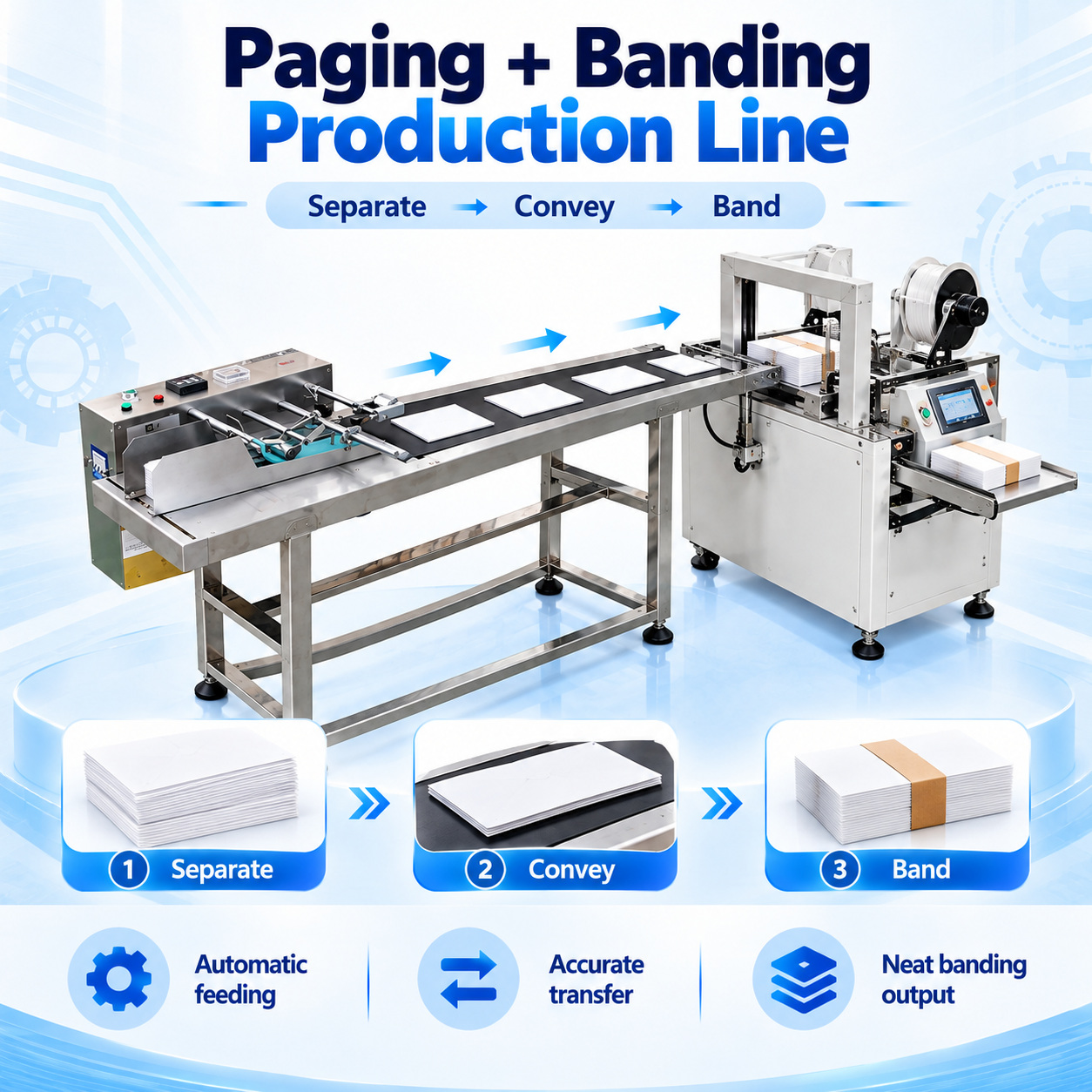
A proposed feeding and banding line is optional and uses a separate banding machine. Define collection, alignment, transfer and the scope of each machine in the quotation. Any counting, batch formation or automatic handover requirement also needs a defined configuration.
Choose this conveyor series for individual separation followed by continuous belt transport. For a confirmed preset-quantity or batch-card task, compare the separate KPW-150 / KPW-300 / KPW-420 tabletop friction feeders. Their batch, servo and pneumatic functions are not specifications of the conveyor series. For counting a stack while it remains together, review the KPW-500A paper counting machine.
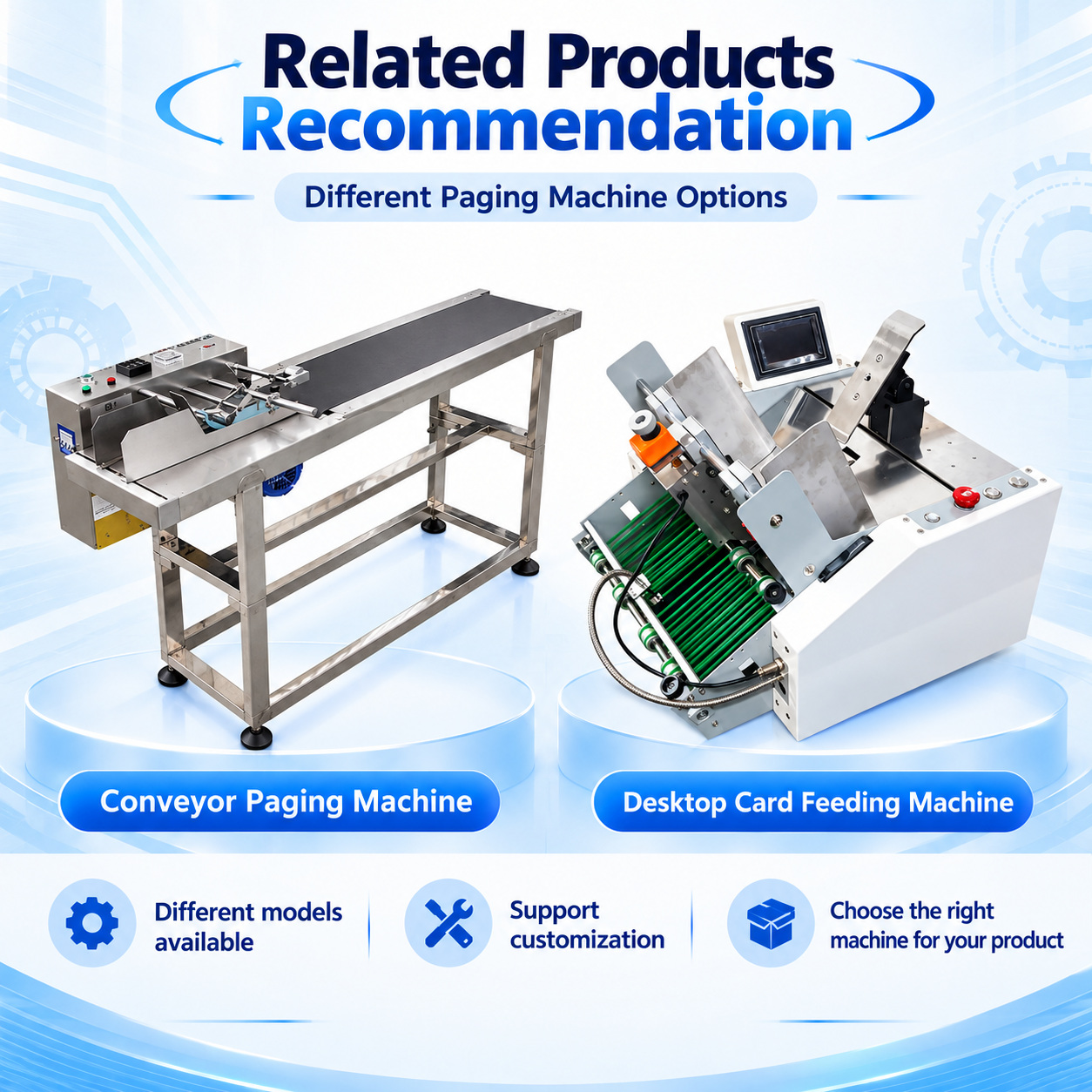
The specifications here cover continuous separation and transport. For preset stopping or batch output, describe the required quantity and workflow in your inquiry, or compare the tabletop batch feeder.
The material name is insufficient. Check complete-item thickness, width, flatness and surface behavior with representative samples.
These are separately defined equipment choices. Request a quotation that identifies the feeder, downstream equipment and transfer responsibilities.
The listed 40–100 m/min is conveyor belt speed. Accepted pieces per minute depend on product length in the feeding direction, spacing and the complete trial result; it is not a guaranteed piece rate.
Use the belt-speed and accepted-output trial guide to record separated products, rejected pieces and interruptions before agreeing the required output.
Send photos or samples; length × width and feeding direction; complete-item thickness range; material and finish; required accepted output; receiving height and next process; available floor space; local power standard; and destination. Identify any coding, inspection, collection or banding requirement.
Mobile:+86-18206519878
Tel:+86-18206519878
Whatsapp:8618206519878
Email:sales@kbwmachinery.com
Add:Wanda Plaza, Fuqiao Street, Rencheng District, Jining City, Shandong Province, China