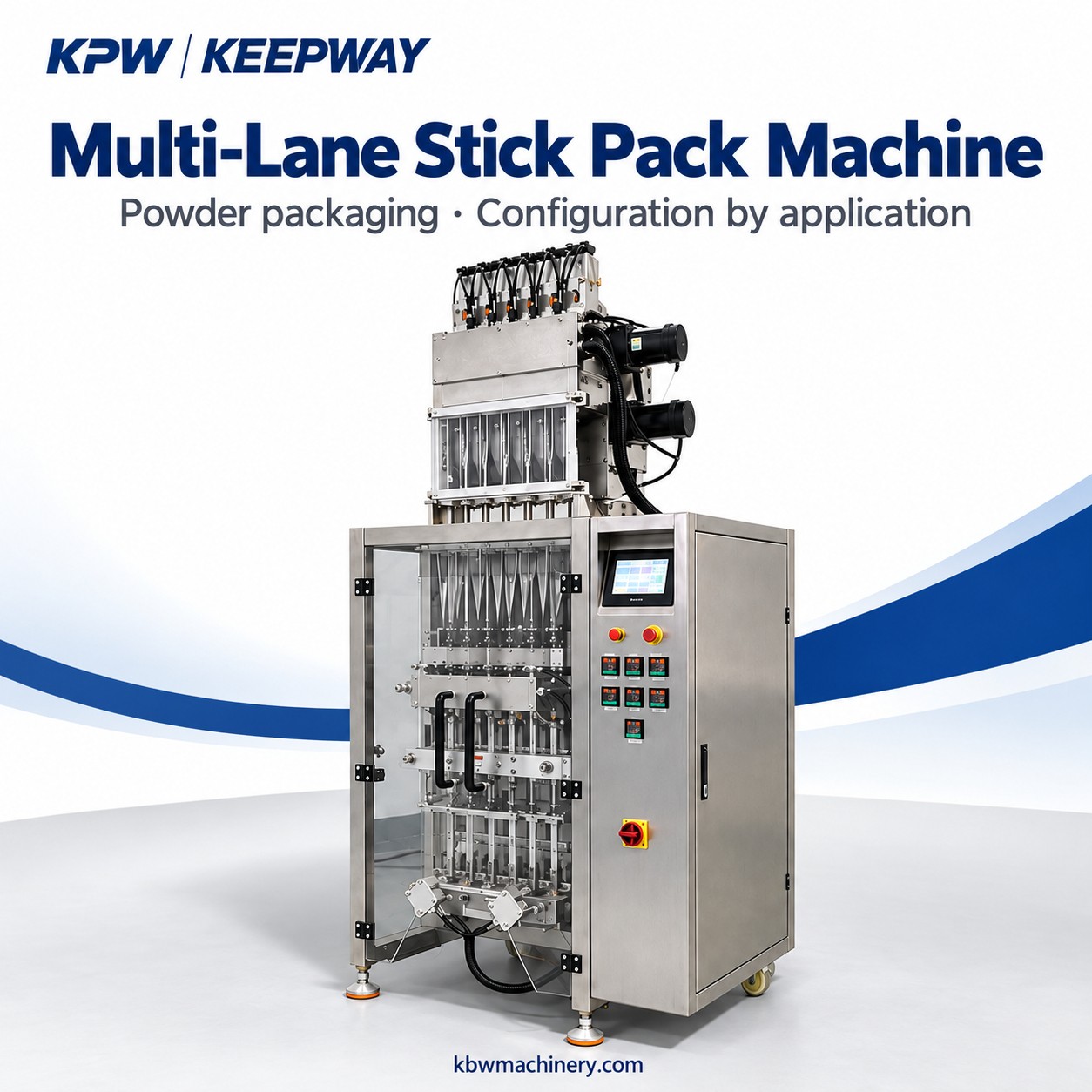
Package powder portions in narrow stick packs using a vertical, multi-lane process that brings together bag forming, metering, filling, sealing and cutting. Keepway offers KPW-420-4K and KPW-420-6K, with the configuration selected around your powder, target dose and finished pack dimensions.
Applications to discuss include coffee powder, protein powder, milk powder and matcha powder. Suitability is assessed using the actual formulation, dose and packaging film. Send your product details and a sample pack or drawing to start a configuration review.
Match the machine to your powder and pack
A small coffee portion and a larger protein portion can place different demands on filling, available bag volume and sealing. Start with the weight required in each stick and the space that powder occupies, rather than choosing a machine by the product name alone.
Useful product details include bulk density, flow characteristics and whether the powder clumps or creates dust during handling. For a blended powder, describe the relevant ingredients and handling behavior without disclosing confidential formulation details unnecessarily. A product sample helps turn these details into a practical packing assessment.

For contract packing, list the products and pack sizes you expect to run, including how often they change. For a dedicated line, identify the main product, operating hours and required good packs per minute or shift. These working conditions help define the right configuration and acceptance criteria.
From roll film to finished stick packs
The packaging workflow has five distinct stages:
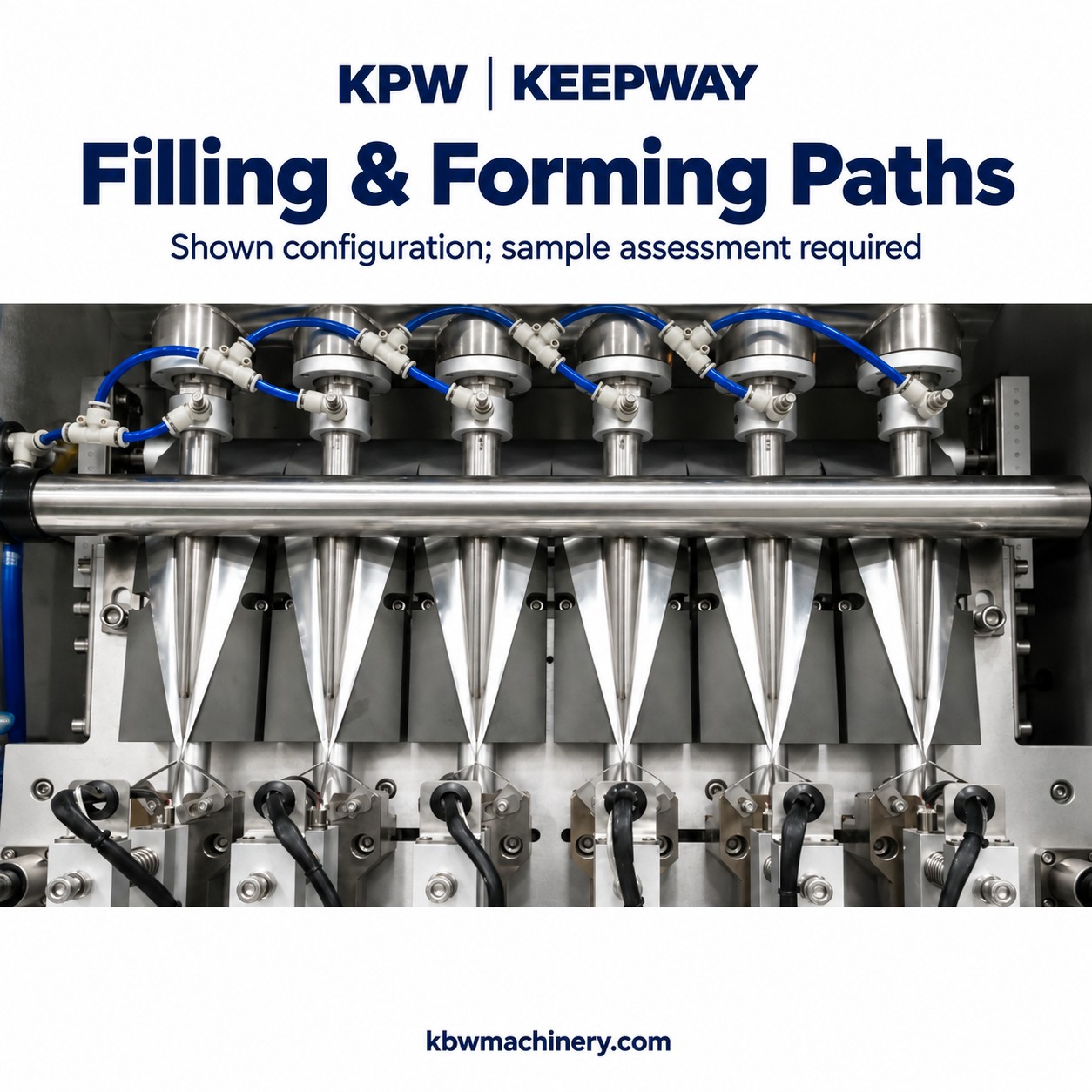
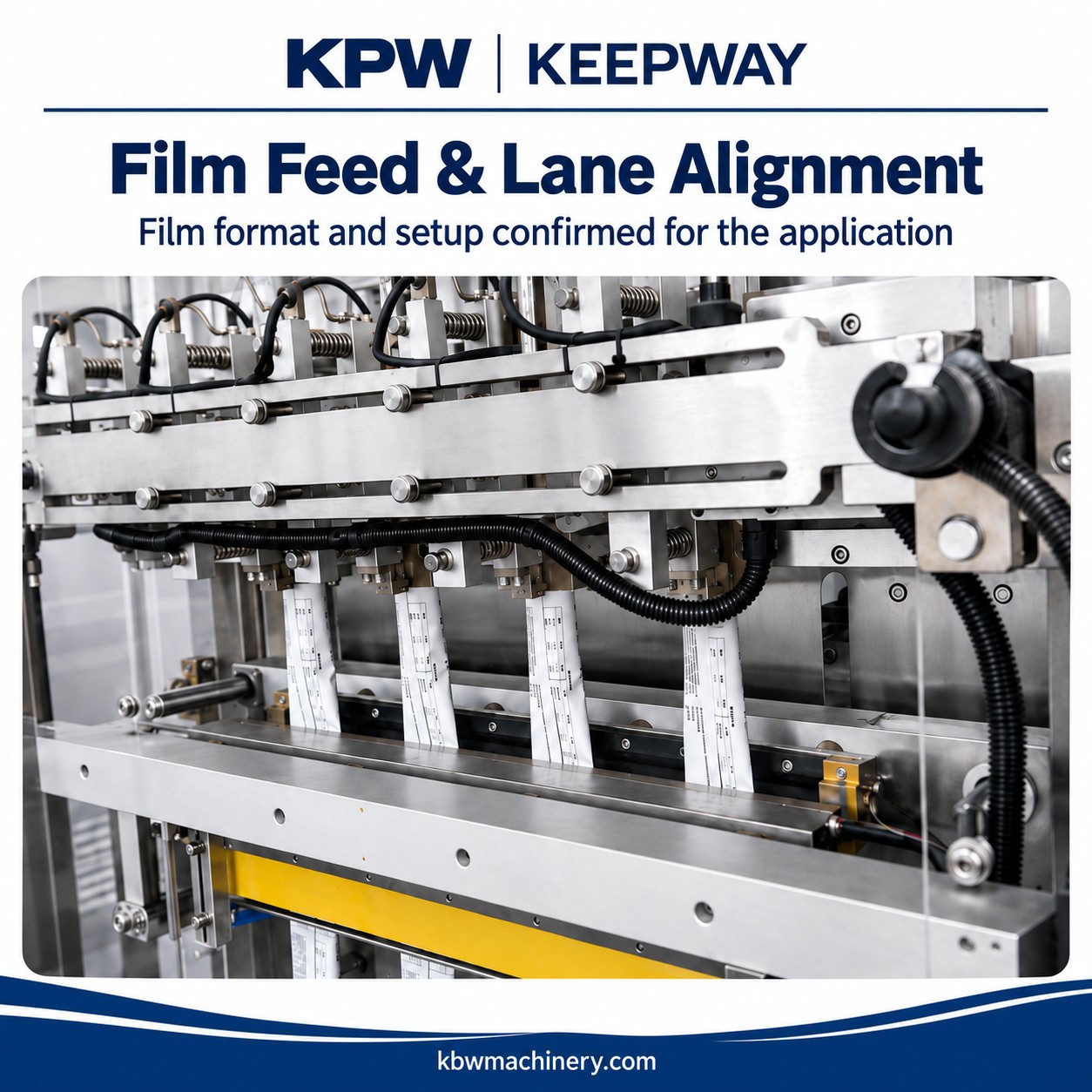
- Bag forming: Roll film follows the film path and forming arrangement to create the stick-pack shape. Finished dimensions and artwork layout are reviewed together.
- Metering: The dosing arrangement measures each portion. The metering setup is selected for the powder and target dose, with weight variation assessed during sample evaluation.
- Filling: The measured powder enters the formed packaging through parallel filling channels. Powder flow and the required filling space are important to this step.
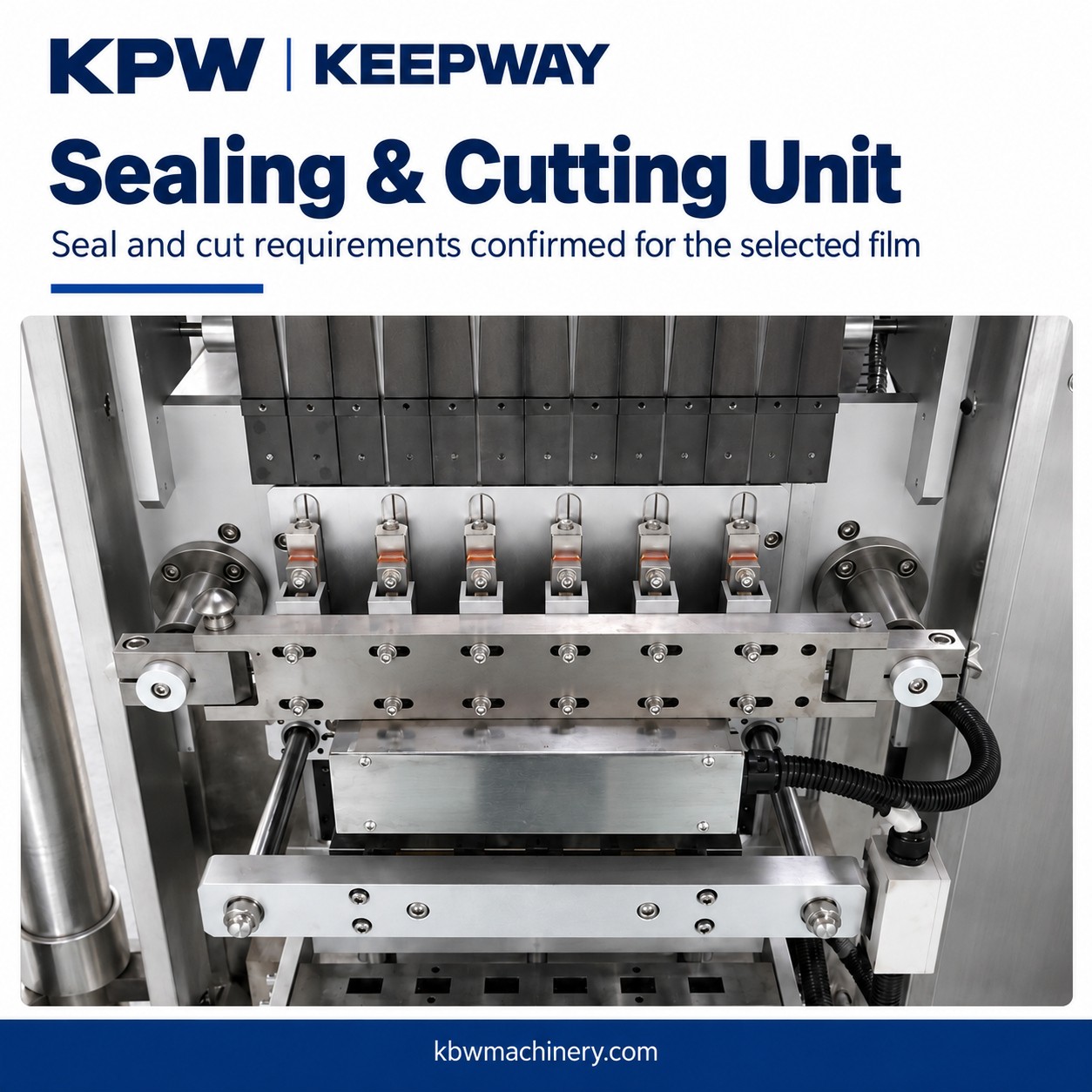
- Sealing: The packaging is closed at its sealing positions. Film specifications and sealing conditions are checked together for the intended pack.
- Cutting: The sealed packs are separated into the finished format. Pack length and cut style are agreed from your sample or drawing.

For an evaluation run, define the product, film, dose and run conditions in advance. Review fill-weight results, seal condition, cut position, pack appearance and usable output together.
Planning a powder trial? Use our lane-by-lane sample test checklist to define the evidence before reviewing results.
Roll film and seal requirements
Send the film supplier's specification, including film structure, thickness, roll width, core size and outside diameter. Include the recommended heat-sealing window if available. For printed film, supply the repeat length, registration-mark details and artwork orientation.

Also provide a finished pack sample or a drawing showing the required seal layout and cut shape. Film compatibility and the forming, sealing and cutting arrangement are reviewed as a combination. This helps identify the required tooling before an order is finalized, without assuming that different films or illustrated pack styles are interchangeable.
Technical Specifications
| Specification | KPW-420-4K | KPW-420-6K |
|---|---|---|
| Bag length | 30–140 mm | 30–140 mm |
| Bag width | 10–50 mm | 10–32 mm |
| Maximum roll-film width | 440 mm | 440 mm |
| Packing speed, per lane | 30–50 bags/min/lane | 30–50 bags/min/lane |
| Air pressure | 0.65 MPa | 0.65 MPa |
| Air consumption | 0.2 m³/min | 0.2 m³/min |
| Power supply | 220 VAC, 50 Hz | 220 VAC, 50 Hz |
| Power | 2.0 kW | 2.0 kW |
| Overall dimensions | 1100 × 990 × 2100 mm | 1100 × 990 × 2100 mm |
| Net weight | 400 kg | 450 kg |
Specifications are catalog references. Final configuration and achievable output depend on the powder, dose, bag and film, and are confirmed in the quotation and sample assessment. The speed is stated per lane, not as guaranteed total machine output. Confirm the lane arrangement and installation drawing for your order.
Configuration, customization and installation
We offer customization according to your requirements, subject to technical review. Describe the additional function you need and how it fits your production process so the quotation can identify the agreed scope.
Before preparing the installation area, review the machine layout, feeding arrangement, cleaning access and finished-pack handling. Confirm the electrical and compressed-air requirements for the selected configuration. Where several products will share the machine, include changeover frequency and cleaning requirements in the review.
The quotation should distinguish the base machine, agreed additional functions and any separate equipment. This gives your purchasing and production teams a clear basis for checking the proposed setup.
Frequently asked questions
1. Can I use it for coffee, protein, milk or matcha powder? These are powder applications to discuss with us. Share the formulation type, dose and pack specification so the proposed configuration can be assessed with your material. Different powders may need different dosing settings or arrangements.
2. How do KPW-420-4K and KPW-420-6K differ? KPW-420-4K has a listed bag-width range of 10–50 mm and net weight of 400 kg. KPW-420-6K lists 10–32 mm and 450 kg. The final selection should match your pack dimensions, required output and agreed lane configuration.
3. What output should I plan for? The catalog speed is 30–50 bags/min/lane. Set the production target in good finished packs per minute or shift, then confirm achievable output for the agreed powder, dose, bag and film during evaluation.
4. Can I request a version for liquids or granules? A different dosing setup may be required. Request a review for your material, including its flow characteristics and target dose. Liquid or granule handling is not included as a standard capability of the powder configuration described here.
5. Which films and seal styles can I use? Provide the roll-film specification and a sample or drawing of the finished pack. The film, seal layout and tooling are reviewed together to confirm a suitable arrangement for your project.
6. What should I send for a quotation? Send the product, dose, pack and film details listed below, together with your output target and installation requirements. Include sample availability and any acceptance criteria you need the proposed configuration to meet.
Request a configuration review
Please include:
- Powder name, formulation type and relevant flow or dust characteristics.
- Target fill weight and required weight tolerance.
- Finished stick-pack width, length and seal/cut drawing or sample.
- Roll-film specification and printed artwork details, if applicable.
- Required good packs per minute or shift, operating hours and product changes.
- Installation country, available voltage/frequency and site constraints.
- Sample availability, requested custom functions and acceptance criteria.
Request your powder packing configuration
Compare other packaging formats
Browse the Vertical Packing Machine range. For a different production approach, compare the KPW-350 coffee powder packaging machine or the semi-automatic coffee powder filling machine.