
BUYER PLANNING GUIDE · 4 OCTOBER 2026
Pallet Strapping Line Integration: A Conveyor Interface Checklist
A strapping station can meet its own cycle specification while the complete line still waits for a pallet, a release signal or space downstream. Before ordering a pallet strapping line, agree how each machine hands the load to the next. Use a shared interface schedule to define responsibility, rather than relying on a photograph labelled “fully automatic”.
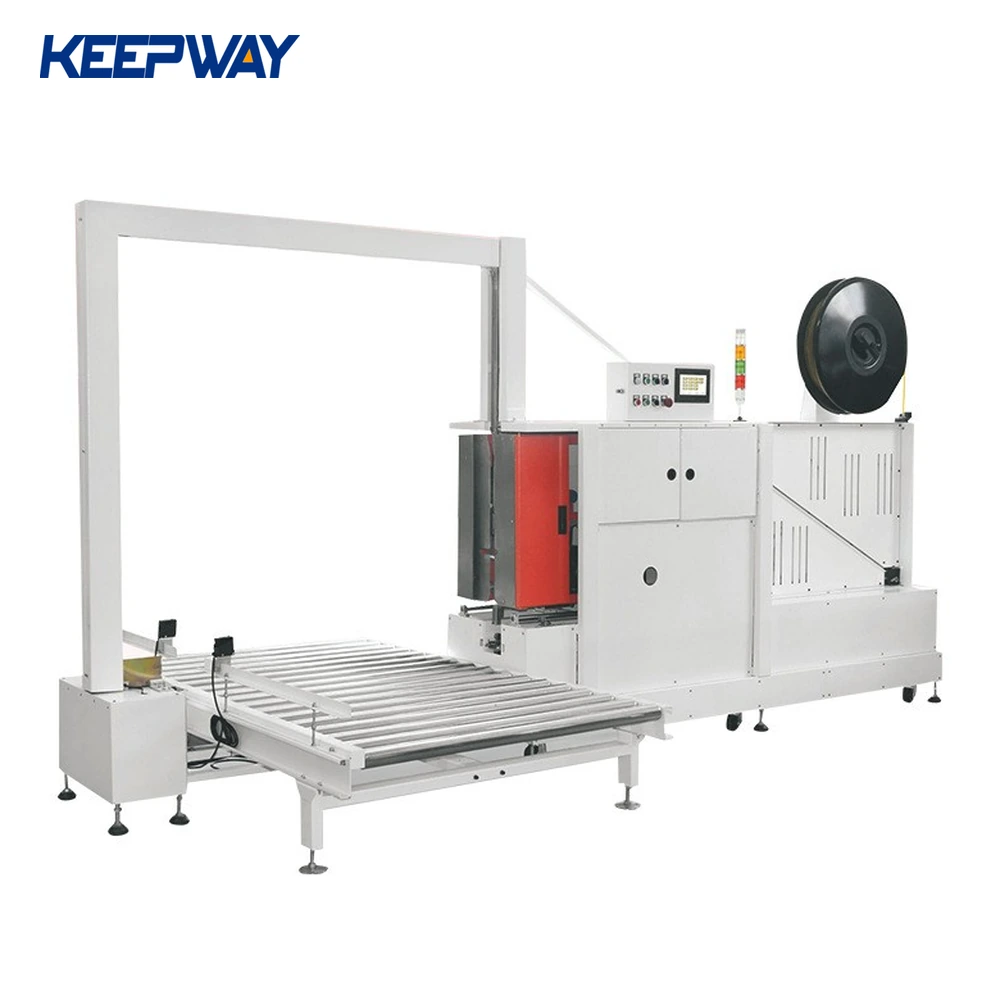
Start with one drawing and one load schedule
Provide a plan view and a side view of the proposed station. Show pallet travel, conveyor top height, available floor space and the equipment immediately before and after strapping. Identify loading, unloading and any manual handling points. Make the drawing revision visible so the machinery supplier and site integrator are reviewing the same layout.
The load schedule should include pallet construction, minimum and maximum loaded dimensions, weight, overhang and permitted travel orientation. Include underside photographs and a drawing of the required bands. Horizontal bands around the sides and straps routed under the pallet need different arrangements. Use the strapping and wrapping comparison to decide the packing operation; this checklist addresses the interfaces after that choice.
Separate mechanical fit from control agreement
| Interface | Information to agree | Evidence to retain |
|---|---|---|
| Incoming transfer | Conveyor type, support, height, orientation and stopping position | Approved drawing with responsibility for each component |
| Strap path | Band route, pallet underside access and movement between positions | Marked pallet drawing and a trial with the actual load |
| Downstream transfer | Release conditions and response when the next station is occupied | Agreed operating sequence and acceptance record |
| Control connection | Required states, interface method and owner of each signal | Integrator-approved interface document |
| Interrupted operation | How trained personnel handle faults and resume the authorised sequence | Model-specific instructions and witnessed handover |
A physical conveyor connection does not establish a compatible control interface. Ask the responsible integrator to document the required ready, occupied, complete and fault states for the project, including who sends and receives them. Do not prescribe a network protocol or assume an existing controller can communicate without reviewing its specification.
Make the boundary of supply explicit
List the strapping station, infeed and outfeed conveyors, load-positioning components, detection, guarding, control equipment and site connections separately. Mark them as included, optional, customer supplied or requiring design. Identify who prepares the installation, connects services, tests the interfaces and trains operators.
This is a procurement control, not a promise that every listed item is needed or available on every machine. A proposed manual handling or bypass arrangement should receive its own integration review. It must not be improvised as a way to keep production moving around a stopped station.
Measure complete pallets, not only individual straps
The confirmed KPW-150 reference is approximately 15 straps per minute. It is not a rate of 15 completed pallets per minute. The number and position of bands, pallet arrival, positioning, frame movement and downstream release all affect the full cycle.
For a useful acceptance record, identify the load, strap, band count, staff involved and observation period. Record accepted completed pallets, rejected cycles, stops and the reason for each interruption. Agree the operating conditions and acceptance criteria before a demonstration. Do not convert a strapping-head rating directly into a guaranteed hourly line output.
Include normal variations in the handover plan
Ask which representative load sizes and orientations will be included in commissioning. Record the approved recipe or setup reference for each format, and identify changes that require a new review. The integrator should define the safe procedure for downstream blockage, a damaged pallet or an interrupted transfer; buyers should request that procedure without inventing control logic themselves.
A 2020 discussion on the independent PLCtalk forum described conveyor tracking and pallet jams around a strapping area. It is an individual engineering discussion, not a complaint-rate survey or a Keepway case. Its useful procurement lesson is to ask how actual load position and authorised recovery are verified. See the original discussion; do not apply its sample programming to an unreviewed installation.
Request an interface review with your quotation
Send the layout revision, load schedule, band pattern, current conveyor details, upstream and downstream machine information, required completed pallets per hour, site services and the installation responsibilities you expect. If the line already exists, include its drawings and available interface documentation.
Review the KPW-150 pallet strapping line for a side-sealing configuration or the horizontal pallet strapping station for bands around the sides. The selected route and approved interface schedule should determine the proposal.
Send your pallet line drawing for a configuration review
Keepway provides a two-year warranty, free replacement parts and shipping during the warranty period, and lifetime service and technical support.