
Will your food tray and cling film work on a tray wrapper?
A supermarket packing room may use the same tray for tomatoes and raised bunches of grapes. Both trays fit the shelf, yet the higher load takes more film around its sides. Before you buy a cling film tray wrapping machine for fresh food, test your filled packs with the film you intend to order. Keep the underside and the shelf-facing side in the same trial record.
Download the tray trial sheet (CSV) Choose three samples
How a retail stretch film tray overwrapper holds the pack
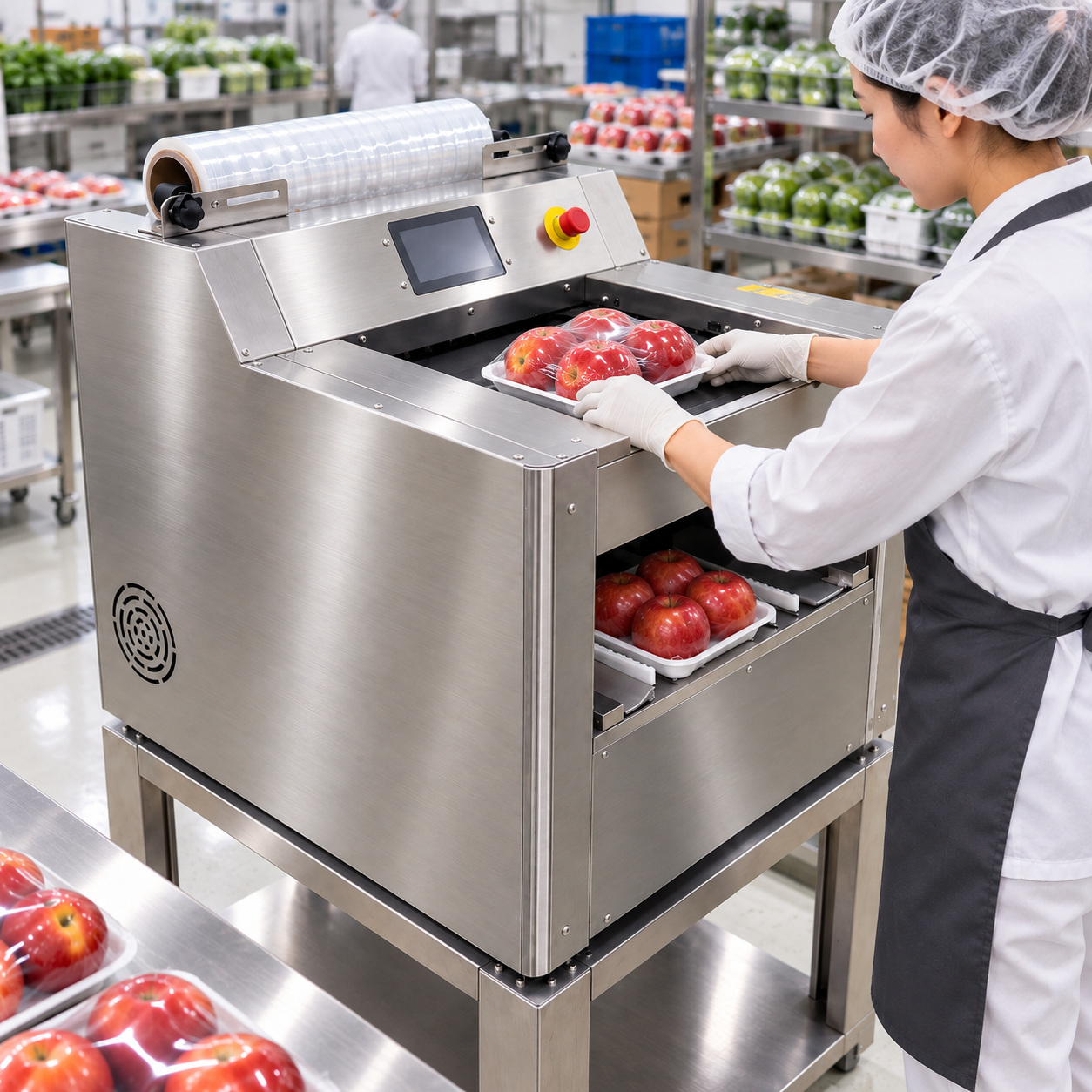
The machine draws film across the food and over the tray rim. The film folds around the sides and underneath the tray. Turn a finished sample over to see where the folds land. Then check whether the tray still sits level and the shelf-facing side shows the product clearly.
If the buying specification calls for a sealed rim, a vacuum skin pack or a modified atmosphere, identify that requirement before quoting. Overwrap on a chilled meat tray does not establish a leakproof seal or a storage life. A buyer who needs film drawn closely around a product under vacuum can compare the vacuum skin packaging process.
Which tray dimensions and film roll should you quote?
Measure the outside length and width across the rim, the height from the base to the highest point of the food, and the total loaded weight. For the KPW-P4050, the published screening ranges are 80–280 mm long, 90–200 mm wide, 10–150 mm high and 100–3,000 g per pack. The listed film width is 250–450 mm and the roll outside diameter must be under 160 mm. A roll can physically fit and still leave too little usable film under a particular loaded tray.
Record the film supplier’s product code, material, thickness, roll width and outside diameter. Keep the tray material and rim shape with those figures. Ask the film supplier for documentation covering the food, temperature and market you intend to serve. For EU-bound packs, the European Commission’s overview of food contact materials explains which materials can come into contact with food.
Run a three-tray sample trial before ordering
Pick actual stock from your packing room. Use the same film roll for the first comparison. The following are sample choices you can adapt to your assortment.
A light produce tray
Choose the shallowest filled tray you sell. Photograph the rim before and after wrapping and check whether the corners pull inward.
A tall, uneven fruit tray
Use the tallest normal presentation. Look for film pressing on raised fruit, uncovered corners or short folds underneath. Record the highest point.
A heavier chilled meat tray
Use the tray and absorbent pad specified for the actual pack. At your normal packing conditions, inspect the underside, display face and label position. Record visible moisture separately.
Photograph the top, side and underside of each pack. Agree with purchasing what a saleable pack looks like before scoring it. If one sample fails, repeat it with one change at a time and identify the new tray or film in the record.
What to change when a sample misses the mark
- A corner comes loose. Compare the underside folds on two trays from the same roll. If the loose corner follows the taller pack, retest the same load with a supplier-proposed film width.
- The tray bows or the food is marked. Photograph an unwrapped control beside the wrapped tray. Try an alternative tray with a firmer rim at the same fill weight and check the result.
- The label sits on a wrinkle. Mark a flat label area on the sample and apply your real label there. Read the actual barcode after normal handling. The KPW-P4050 offers optional real-time printing with manual label application. Use the finished-and-labeled throughput guide to time the full job.
Request a tray wrapper quote using your trial results
Send the sample sheet, your tray and film photos, expected finished packs per hour, label method, electrical supply and destination country. Identify which tray must pass for an order to go ahead. Ask for the proposed machine configuration and a sample result for that specific tray-and-film combination.