
BAG SEALING · BUYER'S WORKSHEET
How to Test a Bag Sealing Machine Before Buying
A short demonstration with an empty pouch leaves important questions unanswered. Use your actual film, filled bag and packing routine to assess a plastic bag sealing machine before choosing a configuration.
Use the trial checklist Discuss your bags with KeepwayStart with the finished package
For a small manufacturer, contract packer or fulfilment team, the useful question is whether the sealer fits the bag and the way people handle it. A sample trial should produce an agreed record of the packaging, machine configuration and observed results.
This is relevant to the wider shift toward packaging automation. In its September 2026 industry commentary, Mondi describes packaging as an increasingly important part of fulfilment performance. Our practical takeaway is to evaluate the complete packing step, including loading and handling. Read Mondi's industry perspective.
This worksheet is for sealing the open mouth of pre-filled, heat-sealable bags. If you need a machine to open mailers, insert products and close the bags, start with our poly mailer bagging guide.
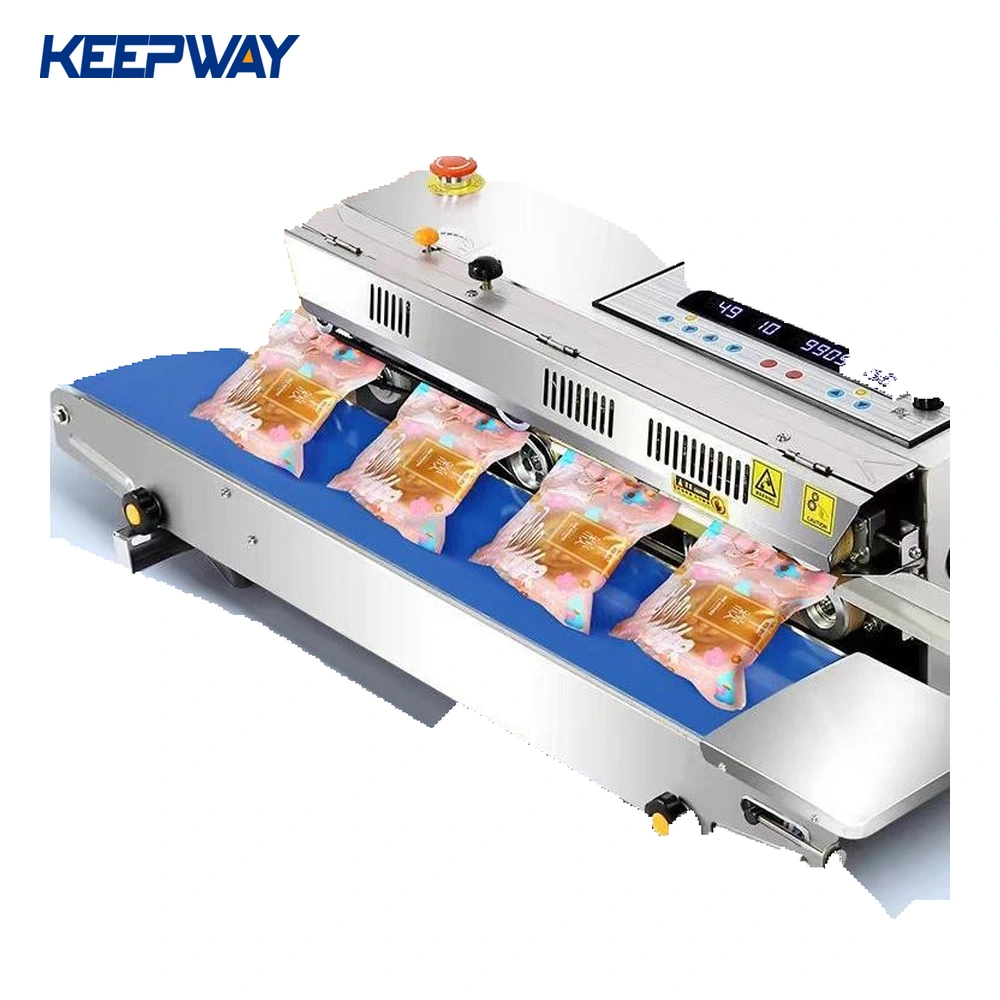
1. Prepare a representative sample set
Agree with the supplier what samples can be accepted and how many are needed before shipping them. Label each bag type so the test video, settings and results can be traced to the same material.
- Packaging: supplier's film specification, heat-sealing layer, thickness and bag dimensions. State whether a thickness figure describes one wall or the combined layers at the seal.
- Filled samples: the intended fill weight, normal headspace and closure position. Include the smallest and largest bags you intend to run.
- Variations: identify changes in pouch supplier, film structure, gussets, zipper position or printed areas near the seal.
- Work routine: show how bags arrive, how an operator presents the mouth, and where sealed bags go next.
A metallic-looking pouch and a paper-faced pouch can have different sealing layers. Record the actual construction; do not use the outside appearance as a substitute for the packaging specification.
2. Agree what the demonstration must show
| Trial | What to observe | What to record |
|---|---|---|
| Representative bag, normal fill | How the mouth enters the sealer and how the filled package is supported | Bag reference, weight, orientation and support arrangement |
| Smallest and largest planned bags | Whether each size can be presented consistently without rearranging the contents | Bag dimensions, headspace and any required adjustment |
| Another film or pouch supplier | Whether a separate setup or another configuration is needed | Material reference and settings for that material |
| Repeated loading at the intended pace | Loading, sealing, discharge and interruptions during one recorded run | Run duration, bags attempted, accepted bags and stops |
| Optional date or batch coding | Whether the requested mark is readable and correctly positioned | Code format, print position and coding option tested |
Ask for an uninterrupted view of a representative run. A close-up of the finished seal is useful alongside a wider view showing the operator and conveyor. Agree the test duration and acceptance criteria before comparing quotations.
3. Check filled-bag handling, not only horizontal or vertical labels
For a powder pouch, granule bag or loose-parts pack that needs to stay upright, ask to see the actual filled bag presented in that position. For a bag that can lie flat, observe whether its contents stay clear of the intended seal area during loading.
Record any extra support, stand or conveyor adjustment used in the demonstration and ask whether it is included in the quoted configuration. A test with a lightly filled bag does not establish suitability for your heavier package.
Our continuous band sealer product page covers orientation and configuration selection. Use the worksheet here to document what was actually tested.
4. Separate seal observations from verified package performance
Record visible wrinkles, gaps, distorted film and inconsistent sealing positions, together with photographs of the samples. Have the supplier operate within the equipment instructions and identify the settings used for each material. Do not treat a generic temperature from another machine as your approved setup.
A smooth-looking seal alone does not establish leak resistance, seal strength or shelf life. Where those properties matter, define the required evaluation with your packaging supplier or quality team and keep the actual test results with the sample reference.
For a packing-rate comparison, record accepted bags and elapsed time, together with staffing and interruptions. Catalogue conveyor speed and finished bags per minute describe different things; the loading and acceptance record helps you evaluate your own workflow.
5. Keep a simple acceptance record
Copy or print this blank record for each material and configuration. The blank fields are for your trial results, not claimed Keepway performance.
| Bag supplier / reference / sealing layer | ____________________________ |
|---|---|
| Bag size / thickness basis / filled weight | ____________________________ |
| Machine configuration / support / coding option | ____________________________ |
| Supplier-approved settings / orientation | ____________________________ |
| Trial date / run duration / staffing | ____________________________ |
| Bags attempted / accepted / interruptions | ____________________________ |
| Seal evaluation method / acceptance criteria | ____________________________ |
| Observed issues / evidence / next action | ____________________________ |
Questions buyers ask before a sample trial
Can I test an empty pouch first?
It can help start a material discussion. Include the intended fill and handling conditions before deciding whether the configuration suits production.
Will one setting cover all my bags?
Do not assume it will. Keep a separate record for each film construction and ask which changes need a new setup or trial.
What should a buyer in the US, Canada, UK or Europe specify?
Provide the destination and actual site voltage, phase, frequency, connection requirements and available space. Identify any documentation your procurement team requires so it can be reviewed for the quoted configuration.