
How do you time a mixed run of apparel orders on a bagger?
A T-shirt can slide straight into a mailer while a hoodie sleeve catches near the opening. To estimate how many mixed apparel orders one operator can finish, time a sequence from the first garment picked up to the last parcel accepted. Mark when the operator finishes loading each order and when its sealed parcel leaves the station. Those observations show where time goes and which part of the job to change.
Build the trial from a real order mix
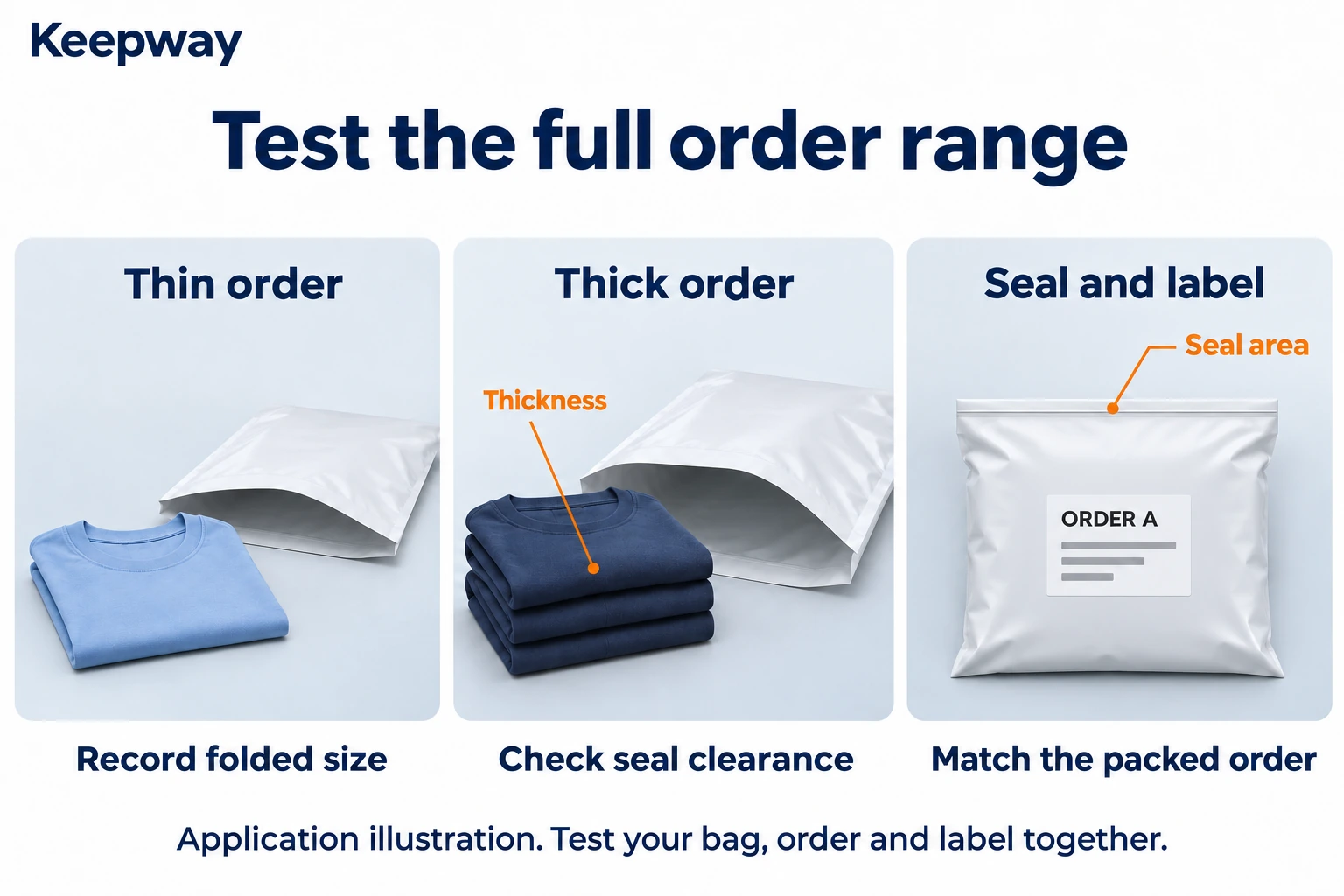
Use a recent dispatch batch to choose the proportions of thin garments, bulky items and multi-piece orders. Label samples with anonymous order codes. Keep the usual mix and sequence for the main run. If you want to try ten bulky orders in a row, record that separately as a stress test. Use the intended bag roll, inserts and label workflow. State whether garments arrive folded, and whether the operator also picks, scans or labels them.
Record three times for each order
- First touch. Start when the operator picks up the order at the agreed infeed point. Use the same point for each order. If someone pre-folds garments upstream, record that person's role separately.
- Ready to close. Mark when the last garment or insert is inside and the opening is clear for the normal closing sequence. The interval from first touch includes any refolding or repositioning. If a bag fails to open, log that delay alongside the order.
- Parcel clear. Mark when the closed parcel clears the station. The interval since ready to close can include waiting for a trigger, sealing and removal. A machine-only cycle requires separate timing between agreed machine events. If the dispatch scan happens downstream, record its result against the same order code.
Order code · garment mix · bag roll and size · first touch · ready to close · parcel clear · accepted on first pass / reworked / rejected · reason for delay.
Use one clock throughout. One person can log times while a second packs, or you can review a recording of the trial. If the operator starts the next garment while the previous parcel seals, keep both timestamps. Adding all the order intervals would count that overlap twice.
Find what holds up the next order
- Bulky orders take longer to load. Watch for a sleeve, leaflet or second item slipping back toward the seam. Mark the thickest point on the folded pack, then use the folded-garment fit check before proposing a wider bag. Compare one change at a time.
- Loaded orders wait before the parcel clears. Note whether the operator is waiting for a label, a normal machine cycle or space to remove the parcel. Record the observed event. A faster closing cycle will help only if that event holds up the next order.
- Sealed parcels come back. Agree what dispatch will accept. Check that the contents are clear of the finished seam and that any required label identifies the right order and scans on the finished bag. Log a repack against its original order code so an extra closure cannot inflate the result.
Compare accepted parcels over the same run
Record the elapsed minutes from first touch on the first order through dispatch acceptance of the last parcel. Include the interruptions that fall within that window and name them. For an hourly comparison, calculate accepted unique orders × 60 ÷ elapsed minutes. Record first-pass accepts and reworked orders separately. A short trial can compare two set-ups. Estimating a full shift also requires evidence for roll changes, replenishment and breaks.
For example, if 12 different orders pass dispatch checks in 6 minutes and one needed a second bag, the observed pace is 120 accepted orders per hour. That extra bag adds to material use. It does not add a thirteenth order. These figures illustrate the calculation only.
What to send for a packing trial and quotation
Send the order mix, folded dimensions at the thickest point, bag specifications, proposed operator duties and required accepted parcels per hour. Include the timing sheet and the order codes that needed rework. For the KPW-550/650 horizontal courier bag packing machine, ask which configuration was used for the trial and which feeding, closing and label-handling steps the quotation covers.