
KEEPWAY · BUYER'S GUIDE
How to choose a vertical hydraulic baler
Match the machine to your cardboard, waste paper or recyclable material—and to the way your team handles every finished bale.
Start with the material, required bale and available working space. A higher pressing-force number alone cannot tell you whether a baler fits your process.
Discuss your baling requirements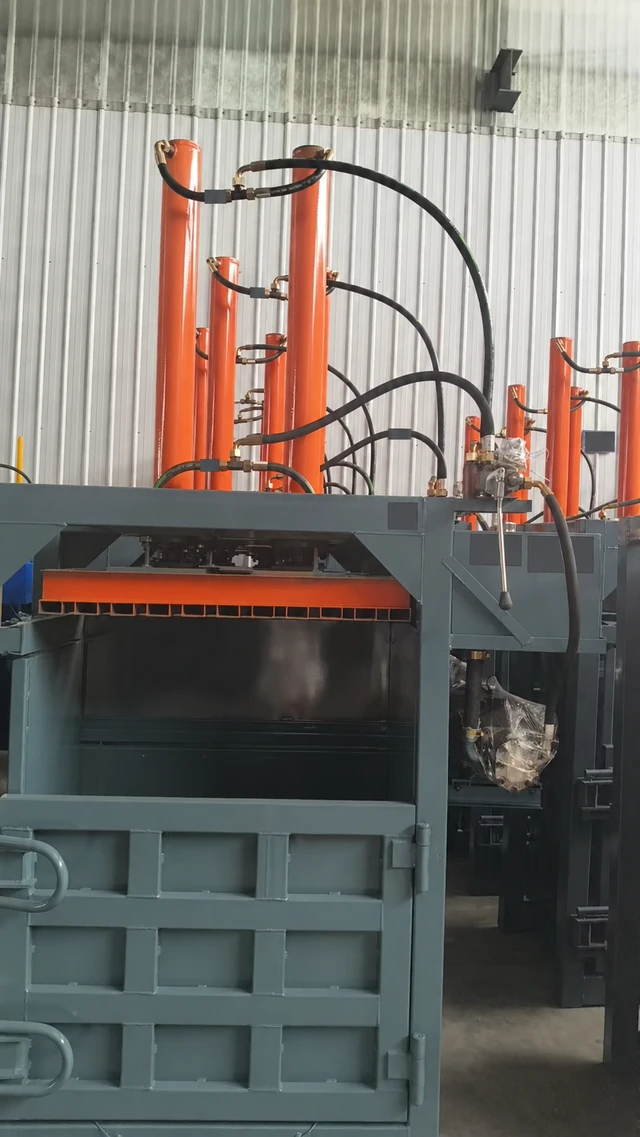
Define the material and daily workload
Cardboard, waste paper, plastic bottles, film and textiles compress differently. Tell us exactly what will enter the chamber, whether materials are separated, their condition and the largest pieces normally handled. Suitability for one material does not establish suitability for every other recyclable.
Record both typical and peak quantities per shift. If you know the weight, use kilograms or pounds; if you only have container counts, include each container's dimensions and photographs. This gives the model discussion a useful starting point without turning an estimate into a promised output.
What to compare before ordering
| Selection check | Information to prepare | What to confirm in the quotation |
|---|---|---|
| Material and feeding | Material photos, condition and largest pieces | Material suitability, feed opening and preparation needed |
| Bale and handling | Required bale size, weight and available handling equipment | Expected result for your material, tying method and bale removal |
| Daily workload | Normal and peak quantities; operator availability | Loading, pressing, tying and removal as a complete working cycle |
| Installation space | Site sketch, access route and ceiling height | Machine envelope plus clearance for doors, operation and service |
| Electrical supply | Voltage, phase and frequency at the installation point | Motor and control configuration for the destination |
| Order scope | Destination country, requested options and material sample availability | Included equipment, applicable documents and agreed test conditions |
A press-cycle figure is only part of the working time. Loading loose material, tying the bale and removing it all affect finished bales per hour. Compare quoted results on the same material and working conditions.
Power and site planning for US, Canadian and European buyers
State the installation supply explicitly: voltage, single- or three-phase, and 50 or 60 Hz. Destination country alone is not enough to specify the electrical configuration. Confirm the required configuration and machine-specific documentation before the order is finalized.
For planning, provide metric dimensions or clearly label measurements in inches. The machine footprint is not the whole working area: include loading access, door movement, bale handling and maintenance clearance. Send a simple marked site sketch with your enquiry.
DOCUMENTED ORDER REFERENCE
KPW-40T: a Sri Lanka order example
The approved KPW-40T Sri Lanka case includes an equipment photograph, a supplied technical reference and privacy-protected order and shipping records.
The supplied sheet lists 11 kW motor power, 380 V three-phase 50 Hz supply, approximately 1650 × 850 × 2750 mm machine dimensions and approximately 600 kg machine weight.
Questions buyers often ask
Does higher tonnage always mean a better choice?
Pressing force needs to be considered alongside chamber size, material, target bale and workflow. Begin with those requirements before comparing model ratings.
Can one quoted bale weight apply to cardboard and plastic?
Do not assume so. Ask for an estimate or agreed trial using your actual material. The waste-paper reference above should not be reused as a plastic-bottle performance claim.
Should I compare a horizontal baler too?
If your loading method, material flow or handling arrangement calls for a different layout, include a horizontal configuration in the discussion. Review the closed-door horizontal baler and automatic wire-threading configuration separately. They have different operating arrangements; select from the quoted configuration rather than appearance alone.
Prepare a useful model enquiry
Send these details so Keepway can review the configuration and quotation scope:
- Material name, condition and photographs.
- Normal and peak quantity per shift.
- Required bale dimensions, weight and recycler requirements.
- Voltage, phase, frequency and destination country.
- Working-space sketch and available bale-handling equipment.
Keepway provides a two-year warranty, free replacement parts and shipping during the warranty period, and lifetime service and technical support.
Published 26 September 2026 · Keepway Machinery