
KEEPWAY · PROCUREMENT CHECKLIST
Label Roll Specification Checklist for Side Labeling Machines
Before ordering a full batch of labels for a side labeling machine, give the label converter and equipment supplier the same drawing and sample requirement. An approved artwork file does not define how the label roll will unwind, travel through the machine or meet the bottle. This checklist helps you agree that handover before production labels are delivered.
1. Start with the container and label position
Send a dimensioned container drawing and representative production samples, including the filled condition if it affects shape or handling. Mark the front and back, conveyor travel direction and the intended label position. Include any taper, recess, seam or shoulder near the label area rather than describing the container only as a flat or round bottle.
For front-and-back labeling, identify each label separately. Show which artwork belongs to each face and how the two positions relate. Do not assume both rolls need the same orientation just because the finished labels look symmetrical.
2. Put feed direction on the label drawing
A useful drawing shows the label face, an arrow for web travel and the edge that leaves the roll first. State whether the labels face inward or outward on the supplied roll, and show how the artwork should appear on the container. Add a simple photograph or physical sample when a verbal description could be read in more than one way.
If the converter uses a numbered unwind chart, attach that exact chart and revision. A direction number without its diagram is an incomplete instruction. Obtain written agreement on the drawing before ordering the production quantity, particularly when the left and right labeling stations use separate reels.
3. Specify the whole web, not only the printed label
| Drawing or order field | What to record | Who should confirm it |
|---|---|---|
| Label dimensions | Width across the web, length along the feed direction, shape and corner details. | Artwork owner, converter and machine supplier. |
| Web width and margins | Backing-liner width and the label position relative to both web edges. | Converter and machine supplier. |
| Gap and pitch | Distance between labels along the web and the repeat distance, with agreed tolerances. | Converter and machine supplier. |
| Roll and core | Core inside diameter, reel outside diameter, roll width and the agreed supply quantity per roll. | Converter and machine supplier for the selected unwinder. |
| Material construction | Facestock, adhesive, liner type and any coating or laminate, with supplier references. | Label supplier and packaging team, then machine sample evaluation. |
| Detection requirements | Clear, opaque, metallic or other special construction; any proposed registration mark. | Machine supplier using an actual sample. |
| Roll identification | Artwork revision, label face or station, material reference, batch and quantity. | Buyer and converter. |
Keep the supplier's units explicit, especially when artwork and equipment documents use different measurement systems. Request numerical dimensions and agreed tolerances; a PDF that looks correctly scaled on screen is not a substitute for them. Do not substitute one machine's core or reel limits for another configuration.
4. Confirm liner and sensor compatibility with samples
The backing liner is part of the feed and release system, not just discarded packaging. Its construction should be identified in the material specification. Avery Dennison's liner guidance describes liner choices in relation to converting and dispensing performance. That guidance does not establish a particular material's compatibility with your Keepway machine.
Ask for evaluation when using clear labels, transparent liners, unusual printing or reflective constructions. The label sensor and setup must suit the supplied web. HERMA's applicator overview identifies unwinding, backing-paper rewinding, dispensing and detection as separate functions; a roll must work through the complete path. Do not infer that a specific sensor or option is included without checking the quotation.
5. Approve a representative trial roll
Send labels made with the intended facestock, adhesive, liner and finishing process, together with the actual containers. Agree the trial quantity and evaluation method with the supplier. A loose printed label can show the artwork, but it cannot demonstrate roll direction, feeding or release.
- Check that the roll fits and feeds in the agreed direction using the supplied instructions.
- Observe label separation, detection and placement on representative containers.
- Check the agreed position, orientation and appearance, including both sides where required.
- Evaluate adhesion under the actual application and service conditions specified by the label supplier.
- Record the approved material and drawing revision, machine configuration and trial conditions.
Agree acceptance criteria before the trial. Record measured results rather than writing “passed” without a basis. If the adhesive, liner, artwork orientation, label size or container changes, identify the change and decide with the suppliers whether another trial is needed.
6. Keep the purchase order and machine configuration aligned
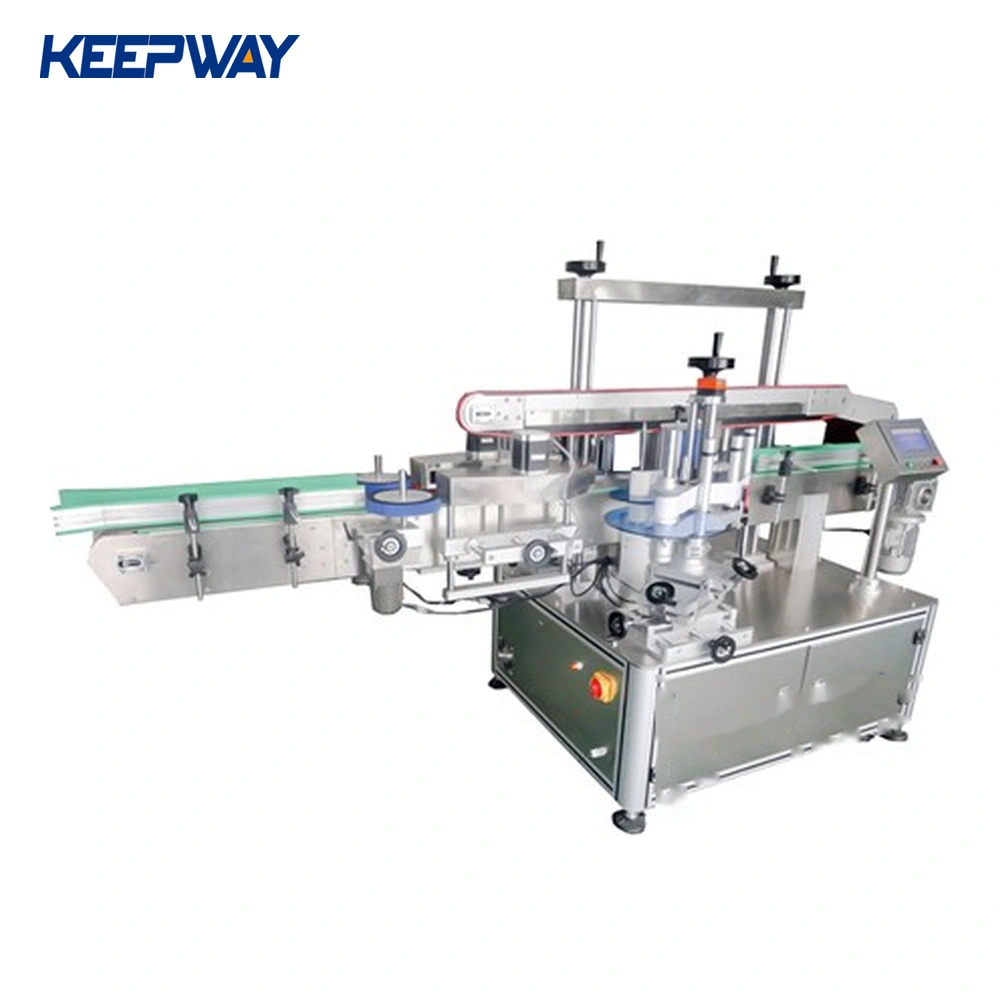
The KPW-BC160 side labeling machine and KPW-BC180 side labeling machine are relevant starting points for a side-labeling enquiry. Both currently list 33–165 pieces per minute; the result depends on the product, label and feeding conditions. A catalogue rate does not approve a particular label roll or guarantee production-line output.
Include the selected model, station arrangement, approved label drawing and material references in the order. Printing, automatic feeding, collection and any special positioning requirements should be listed as included or optional. The machine selection, label artwork approval and material compatibility approval are separate records that should agree.
Send a label-roll drawing for configuration review
Discuss your side-labeling application
Provide the container drawing and samples, front/back artwork, web-direction drawing, label and liner specification, core/reel sizes, required output and destination power. If a field is not yet fixed, identify it so the label supplier and equipment supplier can settle it before the production order.
Keepway service: two-year warranty, with replacement parts and shipping of those parts supplied free of charge during the warranty period; lifetime after-sales service and technical support.