
BUYER PLANNING GUIDE · 6 OCTOBER 2026
CARTON SEALING · CHANGEOVER PLANNING
Carton Sealer Changeover: Test the Box Sequence You Actually Run
A long demonstration with one box size can hide the delays in a mixed-SKU packing shift. Use an agreed carton sequence to compare size adjustment, seal quality and accepted output before choosing a case sealer.
Send my carton sizes for a configuration reviewUse the trial recordStart with how cartons arrive
This guide is for manufacturers, fulfilment teams and contract packers whose carton sizes change during a shift. It helps prepare a supplier trial; it is not a machine setting procedure. Keep the agreed operation and adjustment method within the selected model's instructions.
Uniform batches and randomly arriving sizes are different requirements. The KPW-FX5050 carton tape sealing machine uses operator adjustment for carton width and height. An automatic flap-folding function by itself does not establish automatic adjustment between every incoming box.
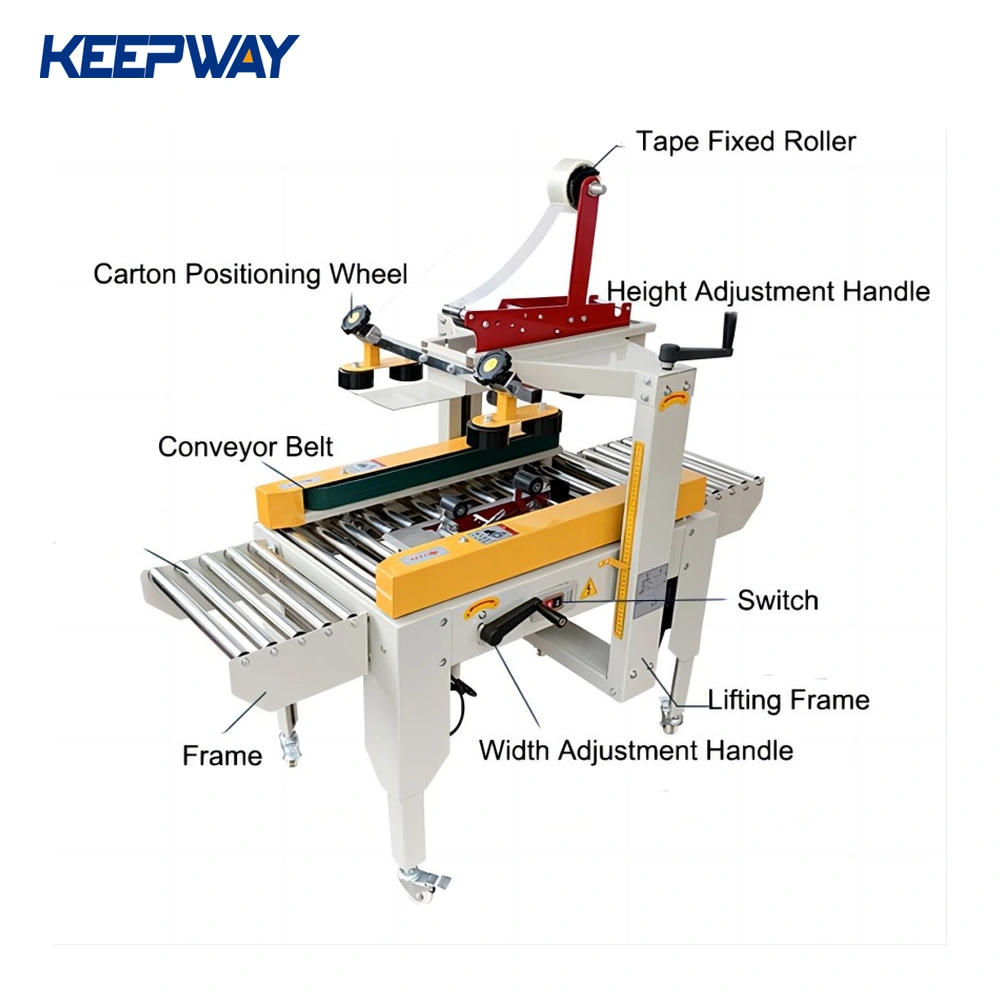
1. Make a carton schedule that preserves the order
Send a short, representative sequence from your packing operation. List the filled carton length, width, height and weight, quantity per batch, board condition, flap preparation and intended tape. Keep the order of sizes visible: a supplier who sorts every box into large uniform batches may remove the changeovers you need to evaluate.
| Incoming cartons | What to demonstrate | Decision supported |
|---|---|---|
| Long runs of one size | One agreed setup, stable running, then the normal batch change. | Whether manual adjustment fits the batch plan. |
| Frequent short batches | Repeat the actual order, including return to a previously used size. | Whether changeover time and setup checks fit the shift. |
| Different sizes arriving consecutively | Confirm an appropriate random-size configuration before running the mixed sequence. | Whether automatic size handling is a quoted and demonstrated function. |
Include difficult but permitted cartons: a low filled weight, a tall narrow box, or a surface that behaves differently with the intended tape. The equipment supplier should review them before the trial. Do not infer suitability from minimum and maximum dimensions alone.
2. Define where the changeover clock starts and stops
Agree one definition across quotations. For example, record the interval from the last accepted carton of size A to the first accepted carton of size B, including authorised adjustment, trial boxes and seal inspection. Also record whether the next batch and its tape were already prepared. Otherwise, two quoted changeover times may describe different work.
Record tape-roll replacement separately from size adjustment. Include both in an observed shift calculation when they occur. Keep the number of operators and their tasks visible, especially when someone prepares flaps, loads boxes, inspects seals or removes completed cartons.
3. Agree what counts as an accepted carton
Before counting output, agree the required seam coverage, tape position and contact, end-tab requirements, flap closure and visible carton damage criteria. Use the actual filled carton and intended tape; a visual demonstration alone does not establish performance throughout distribution.
Label the accepted reference samples with the carton format, tape specification, date and configuration. If transport testing or customer-specific packaging approval is needed, agree that separately. Do not turn an attractive seal photograph into a universal performance claim.
4. Compare a complete trial window
Accepted cartons per observed hour = accepted cartons ÷ total observed minutes × 60. Use the same agreed time boundary and carton sequence for each option. Retain time spent on size changes, permitted recovery and tape replacement within that window instead of reporting only the fastest running section.
Also show rejected or reworked cartons and their reasons. The running rate and the complete-window rate can both be useful when labelled clearly. A conveyor speed in metres per minute cannot be converted directly into completed cartons per hour without carton spacing and the rest of the workflow.
A record to agree with the supplier
| Record | Value or evidence to provide |
|---|---|
| Machine and supplied options | Model, tape head, adjustment method and line equipment |
| Carton sequence | Size, filled weight, batch quantity and arrival order |
| Tape and carton material | Specification and sample identification |
| Observation window | Start/end definition and total minutes |
| Output | Accepted cartons; rejected/reworked cartons; reasons |
| Changeovers and stops | Number, duration, cause and operator tasks |
| Approval | Reference samples, agreed criteria and open actions |
What can the trial establish?
It supports a decision about the tested cartons, tape, configuration and workflow. A different box mix, staffing plan or incoming conveyor can change the result. Ask for the quoted scope and any unresolved conditions in writing; compare the complete installed requirement rather than assuming the demonstration includes every conveyor, guard or accessory.
For broader procurement scope, read our carton sealing automation buying guide. Use the carton sealing equipment selector to distinguish centre-seam taping, flap folding and tape wrapping.
Send your carton sequence, not just one box size
Include filled carton dimensions and weights, batch order, target accepted cartons per shift, tape specification, flap condition, line layout, site power and destination country. Add your name, company and preferred contact details through the enquiry form so Keepway can discuss the configuration and trial scope with you.
Request a carton-size and changeover review