
Which samples should you test on a tabletop banding machine?
If one tabletop banding machine will handle several cartons or paper stacks, start with the pack that comes closest to the machine opening and the pack most likely to slip, fan out or show a pressure mark. Mark the intended band line on both. The best-selling size can demonstrate the usual job, but it may run well even when another item in the range fails.
Pick the pack that has the least clearance
Lay each finished pack on the bench the way the operator will present it. At the proposed band line, record the width across the pack and its height above the bench. Include a protruding flap or uneven top if it passes through the opening. Record the feed direction separately so the supplier can reproduce it.
Compare width and height separately. For example, a 180 mm wide × 25 mm high stack and a 95 mm wide × 80 mm high carton test different limits. Send both if they are your widest and tallest packs. These dimensions illustrate sample selection. Ask the supplier to confirm usable clearance for the quoted configuration.
Pick the pack that is hardest to hold or protect
Ask the packing operator which item shifts on the way to the dispatch tote, or which carton shows a crease where the band crosses its edge. Use that item in its normal condition, with the usual fill, sheet count and surface finish. For a short stack, mark the top sheet so the buyer and supplier can see whether it has moved after handling.
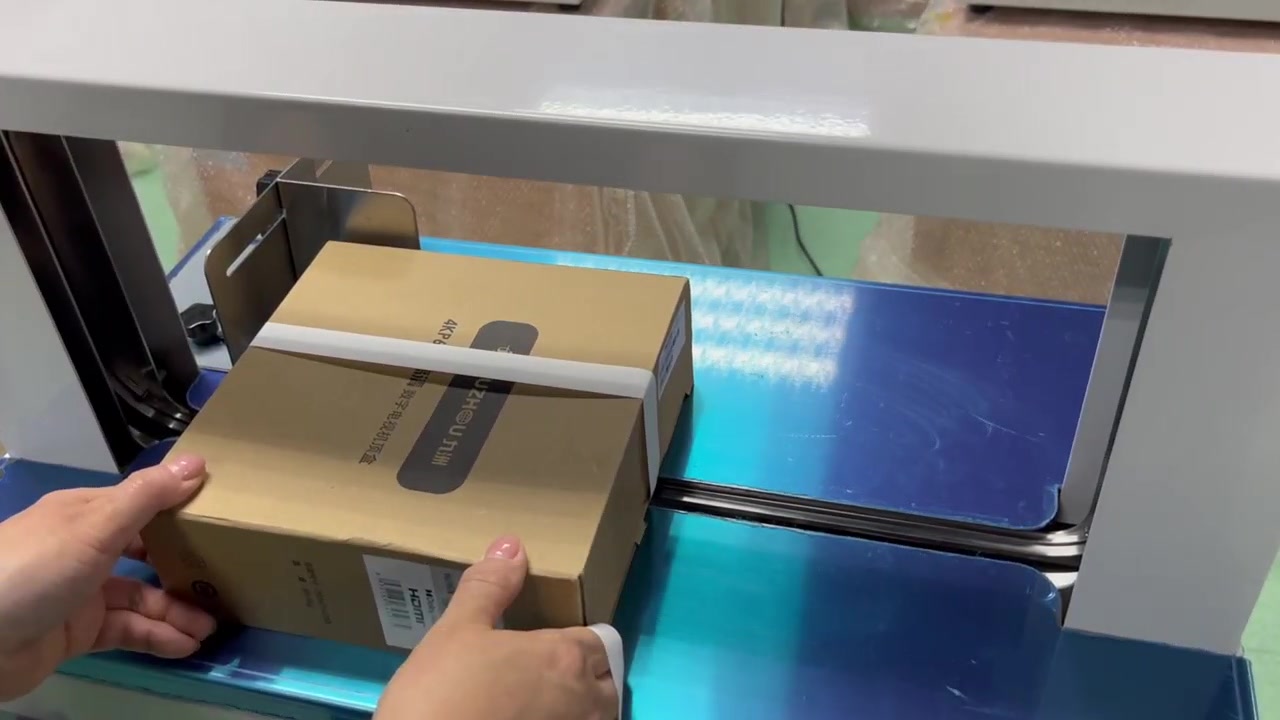
Add a third sample when a different risk remains. A wide flat stack, a tall rigid box and a shallow glossy carton can each justify a trial. Also flag an unusually small cross-section, a different band material or an opening feature that the other samples do not cover.
Agree what the trial should prove
- Identify the samples. Give each pack a code. Photograph it with a ruler and mark the top, feed direction and band line. Include a known-good finished pack if you have one.
- Run and handle each pack as you would on site. Use the proposed band stock. Load the pack, remove it and transfer it to the next tote or workstation. Inspect the edge, sheet alignment and band position after that transfer.
- Repeat a changeover. Run the first pack, change to the second and return to the first. Write down which guides or settings changed, the time until the first acceptable pack and what happened to any rejects. Record an operator-assisted run as such.
What to send with your quotation request
For each sample, send its code, packed width and height at the band line, material or finish, band specification if known, and a photo of any marks your customer would reject. Include your usual batch size, changeovers per shift and the target for acceptable finished packs. Agree the pass conditions for each sample before the supplier runs it.
Ask KEEPWAY to review my sample sizes
Review the KPW-SDJ150 tabletop banding machine for a staffed bench. If the paper or film itself changes between formats, use the paper and OPP appearance trial to compare the materials on the same pack.