
BUYER PLANNING GUIDE · 5 OCTOBER 2026
Hand Strapping Tool Quotations: What Should the Kit Include?
Two quotations for a hand strapping tool may cover different things. One might include only a tensioner, another a tensioner and crimper, and a powered option may need its own battery, charger or air connection. Before comparing prices, identify the strap and the finished joint, then ask each supplier to itemise the same complete working kit.
Name the packing task precisely
State whether you are buying a portable tool for an operator to carry around a load, a replacement part of an existing kit, or a machine used at a fixed packing table. The words “PET hand strapping” can lead to different equipment. The KPW-750, for example, is a tabletop semi-automatic machine that supports PP and PET; it is not a portable tensioner and crimper.
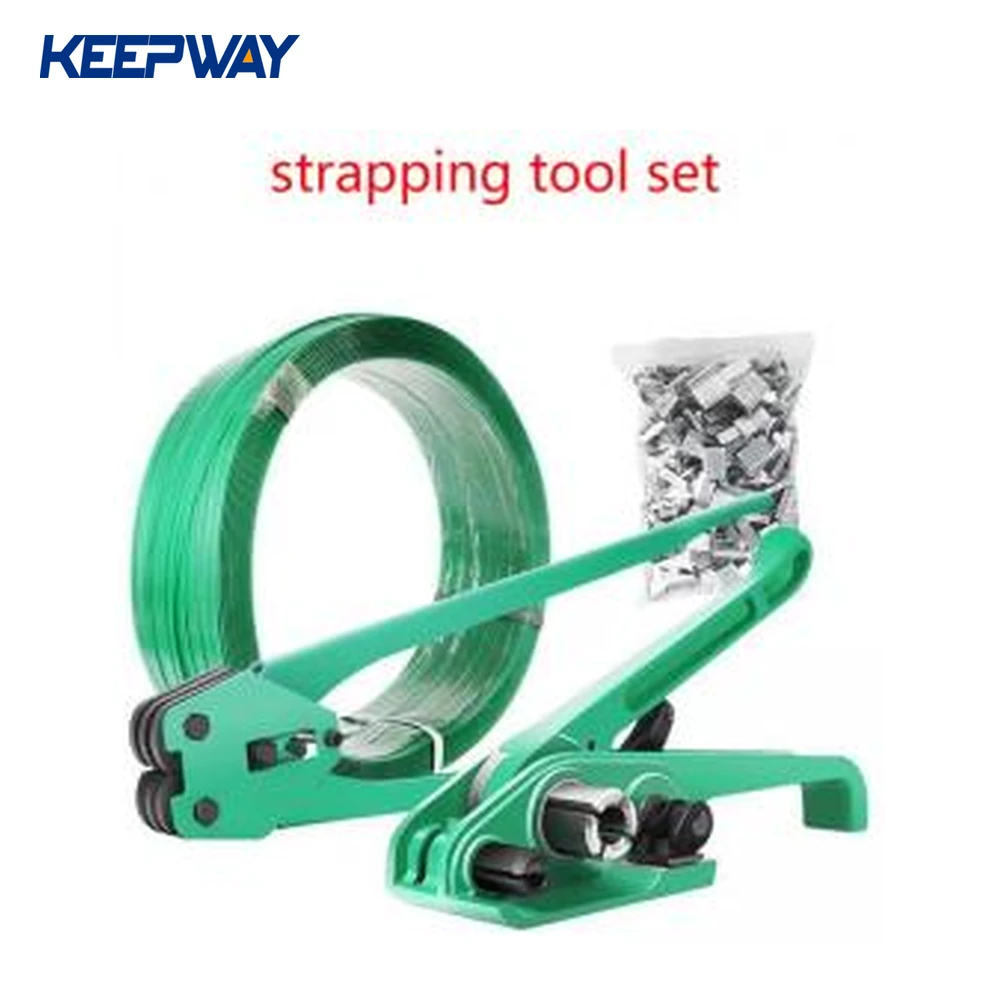
For the manual plastic-strapping set shown by Keepway, tensioning and crimping use separate tools and a matching metal seal. A tensioner alone does not complete that joint. A powered tool using another joining method should be compared as a different kit, not as the same product with a motor added.
Send a strap specification, not just a colour
Include material, width, thickness, surface finish and supplier code. Add a photograph of the reel label and, where available, a short sample. Tell the supplier whether the tool must work with existing straps and seals or whether the complete consumable system can be selected together.
Do not assume that every tool described as PP/PET supports every size of both materials. Steel strapping requires a suitable steel-strapping tool system. The manual plastic-strap set does not establish a steel or sealless-steel capability. If the required width or joining method is uncertain, leave it open for confirmation before choosing a model.
Use a line-by-line quotation schedule
| Item | Ask the supplier to identify |
|---|---|
| Main tool | Exact model, supported strap specification and joining method |
| Additional tools | Matching crimper, cutter or other equipment required for the proposed joint |
| Consumables | Strap and seal codes, sizes, quantities and whether samples or production reels are included |
| Power-related items | For the selected powered system only: battery and charger quantities, charger supply, or specified air connections |
| Handling accessories | Dispenser, suspension or protection items requested for the workstation, with inclusion clearly stated |
| Documentation and support | Instructions for the exact model, parts identification and warranty scope |
This list defines questions, not the standard contents of a Keepway order. Ask the supplier to mark every item as included, separately priced, supplied by the customer or not applicable. A photograph containing several tools or reels is not a packing list.
Check the tool against the real package
Provide filled-package dimensions, weight, strap positions and photographs of the area where the tool will sit. Identify fragile surfaces, awkward access and any corners needing review. State the number of straps per package and the approximate workload per shift. These details help compare operator handling and a proposed tool combination without claiming a universal labour saving.
Agree a demonstration using the intended strap and package. Record the completed joint, band position and any package damage against criteria set for the application. Strap break strength, tension setting and finished-joint performance are different measurements. Do not use a maximum tension figure by itself as proof of a better or safer package.
Keep battery or air requirements model specific
For a battery-powered proposal, confirm the compatible battery and charger references, supplied quantities and destination power supply. Ask which conditions apply to any cycles-per-charge statement, including the strap and working setup. Do not apply a competitor's battery figures to a Keepway tool.
Signode's BXT product information illustrates why comparisons should identify the precise variant: strap ranges, batteries and operating figures differ within one tool family. This is a reference for structuring questions, not a statement that another supplier's parts or settings are interchangeable with ours.
For a pneumatic proposal, have the supplier specify the necessary air supply and connection for that model. Do not turn a catalogue reference from another tool into an installation setting. Follow the delivered instructions for operation, isolation and maintenance.
Compare the cost of an accepted package
Retain the kit price separately from recurring straps, seals, wear parts and handling costs. During the agreed trial, record accepted packages, rejected joints, consumable use and operator time. Use the same package and acceptance criteria when comparing proposals. A low tool-only price may be incomplete; a higher price is not evidence of better results without the matched-kit trial.
If you are changing only the strap supplier, use the PET supplier-change checklist for consumable approval. This article focuses on what the initial equipment quotation includes.
Request a matched tool kit
Send the strap specification, proposed joint, package photographs and weight, daily workload, required tool quantity, existing equipment and destination country. State whether you need a complete new kit, a replacement tensioner or a crimper matched to existing seals.
Request a manual plastic-strapping kit quotation
Keepway provides a two-year warranty, free replacement parts and shipping during the warranty period, and lifetime service and technical support.